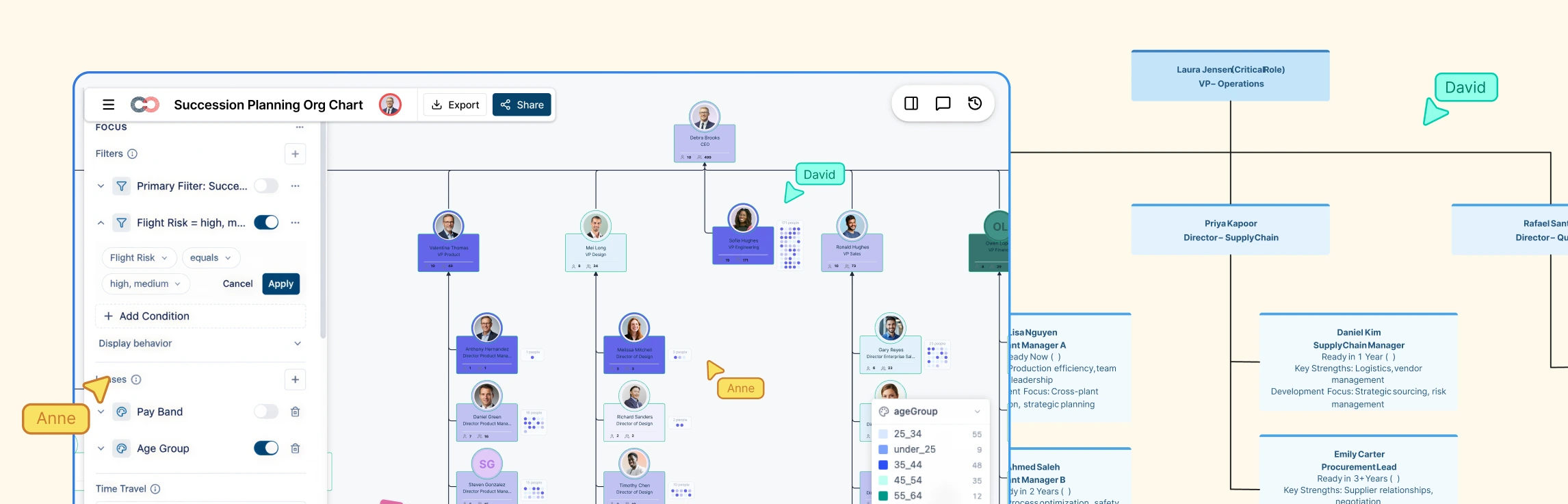
Succession bench strength answers a simple but high-stakes question: if a critical leader or expert role opens tomorrow, who can step in, how soon, and what risk remains? A strong review does not stop at naming one backup. It shows depth, readiness, concentration risk, and how the organization would absorb change across multiple roles at once.
The right succession system gives a Chief People Officer a defensible answer to four questions: Which critical roles are exposed? Who could step in? When will each candidate be ready? What happens elsewhere in the organization if a move is made? If a system cannot answer those questions with current evidence, position-based continuity, and controlled visibility, it is storing succession data rather than supporting succession decisions.
If you’ve ever tried to plan a department’s growth using three different spreadsheets and a stale slide deck, you know how hard it is to make confident decisions when the structure, roles, and hiring assumptions live in different places.
Leadership transitions rarely fail because they’re unexpected. They fail because organizations can’t clearly see who’s ready, where the gaps are, and what happens if a key leader leaves. This guide explains when to use succession planning org charts, what problems they solve, and how to build one step by step. It also covers best practices and common pitfalls so succession planning becomes an ongoing decision system instead of a once-a-year exercise grounded in positions, successors, scenarios, and secure visibility.
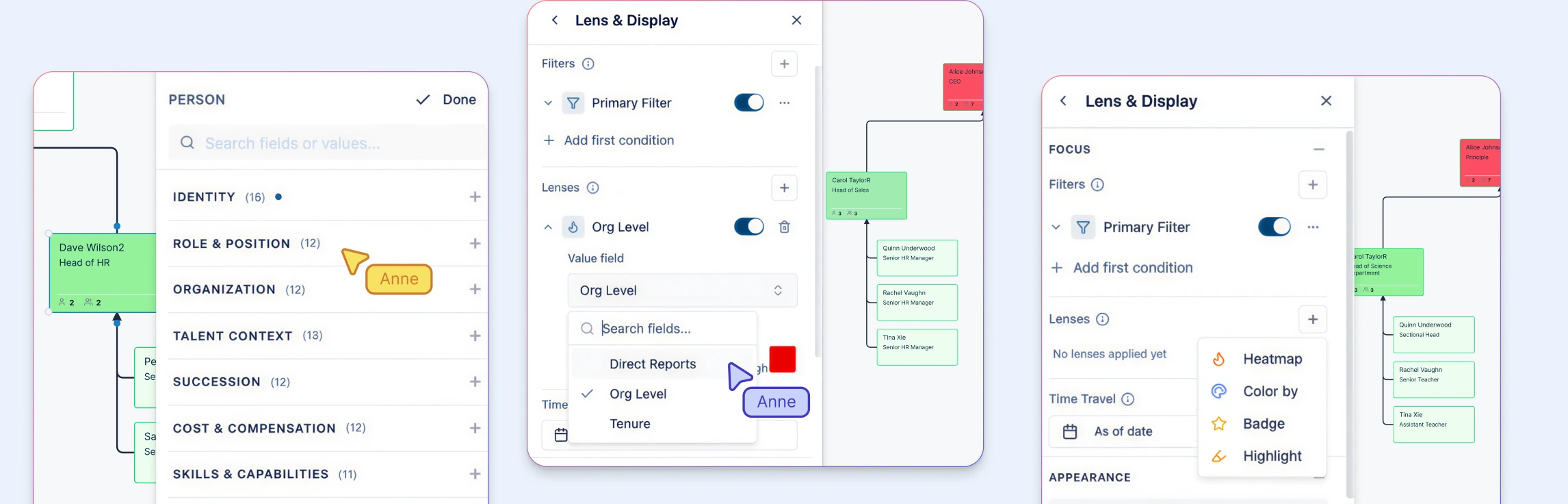
This guide explains how to close that gap by using org charts as a live workforce-planning surface. Instead of treating the chart as a static directory, teams can use it to compare the current organization with future-state scenarios, connect workforce decisions to succession risk, and turn headcount planning into a clearer executive conversation. In Creately Atlas, reviewed CSV imports, separate people and positions, and 201 fields across 15 packs support workforce analysis and proposed org changes.
A strong talent pipeline gives teams options when critical roles become vacant. Organizations can’t afford gaps in leadership or key roles, and employees expect clear opportunities to grow. That’s where talent management and succession planning come together — creating a system that not only develops your people but ensures your business stays ready for the future. This guide will show how these two strategies work hand-in-hand to keep your workforce engaged, prepared, and primed for success.
This guide walks you through replacement planning in a clear, practical way, so you’re never left guessing when key roles change. You’ll learn what replacement planning is, when to use it, and where it fits into a broader talent strategy. We’ll break down the pros and cons, show how succession planning helps close the gaps, and bring it all to life with real-world examples across business, operations, and academia.
Growth and continuity shouldn’t feel like competing priorities. Employees want to know where they’re headed, and organizations need confidence that the right people are ready when change happens. That’s where career planning and succession planning come together. This guide breaks down how each works, how they differ, and most importantly, how aligning them creates clearer growth paths for employees and stronger, more resilient leadership pipelines for the business.
Every team faces the crisis of the leadership pipeline. This guide will show you how to execute a high-impact, strategic 9 box talent review for succession planning. We will explore how to bridge the gap between talent calibration and active pipeline management, ensuring your review process yields a tangible, visual roadmap for your company’s future leaders.
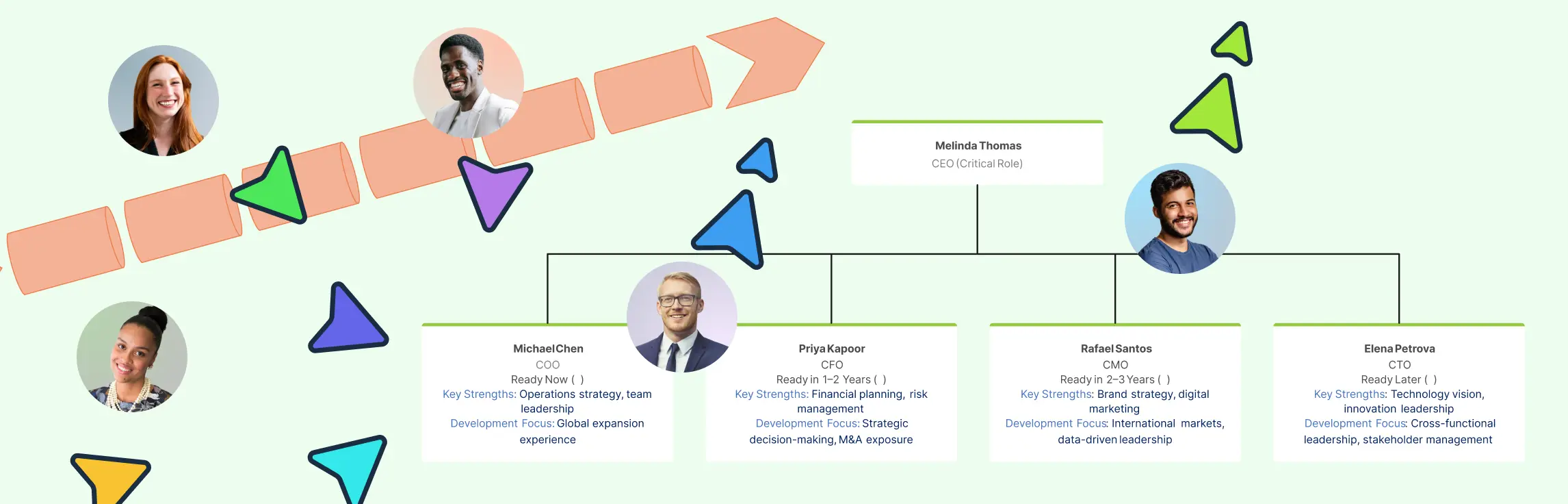
The sudden departure of a key leader shouldn’t feel like a localized earthquake that brings your entire workflow to a halt. If you’re tired of the “single point of failure” anxiety, this guide moves past dry theory to provide concrete succession planning examples and visual roadmaps that actually work for modern teams.
For many teams, the “panic-hire” reality is a result of scattered workflows and a lack of structural clarity. This guide explores the succession planning framework as the structural “bones” of your leadership strategy, comparing the big three succession planning models—Pipeline, Role-Critical, and Talent Pool—to find the one that “just works” for your organization.
Planning for the future of your team can feel tricky, but knowing the right approach makes all the difference. In this guide, we’ll break down how succession planning and replacement planning help organizations stay ready, keep operations smooth, and build strong leadership for tomorrow.
The succession planning process has four core stages: identify critical roles, assess successor readiness, develop internal talent, and implement and review the plan over time. This guide treats them as a practical framework, not a universal standard, and maps them to six steps: identify roles (steps 1–2), assess (steps 3–4), develop (step 5), and implement/review (step 6).
A succession planning strategy sets the governance, criteria, and development approach for continuity; a succession plan is the maintained artifact listing critical roles, potential successors, readiness gaps, and development actions. This strategy guide focuses on what a usable plan should contain and how to govern it. Use the separate succession planning process for the six-step workflow, the succession planning framework for model selection, and succession planning examples for illustrative layouts.
Succession planning best practices help organizations prepare successors, reduce leadership risk, and maintain continuity when key roles change. This guide covers practical practices for executive and board succession planning, talent development, governance, readiness reviews, and common mistakes.
Succession planning is the process of identifying and developing people who can fill critical roles in the future. It protects continuity by preparing successors before a vacancy occurs. This guide explains the meaning, definition, stages, benefits, and practical examples of succession planning.