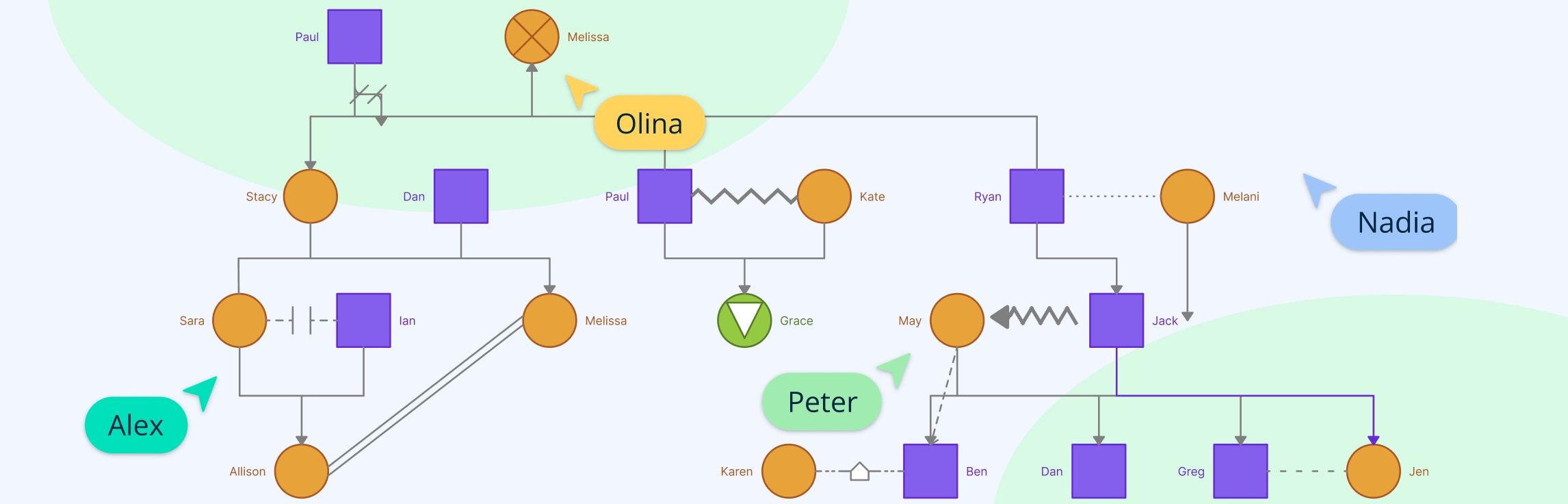
Using a genogram in therapy is one of the most effective ways for therapists to explore a client’s family history. This powerful therapeutic tool helps identify generational patterns, emotional influences, and past trauma that may impact a person’s mental health. In this easy-to-follow therapy guide, you’ll learn how to use genograms in therapy, the key benefits, and discover 10 different types of therapy genograms used to support more personalized treatment plans. With Creately’s intuitive platform, creating and analyzing genograms becomes a seamless process, enhancing therapeutic outcomes effectively.
Most Widely Used Therapy Focused Genogram Examples
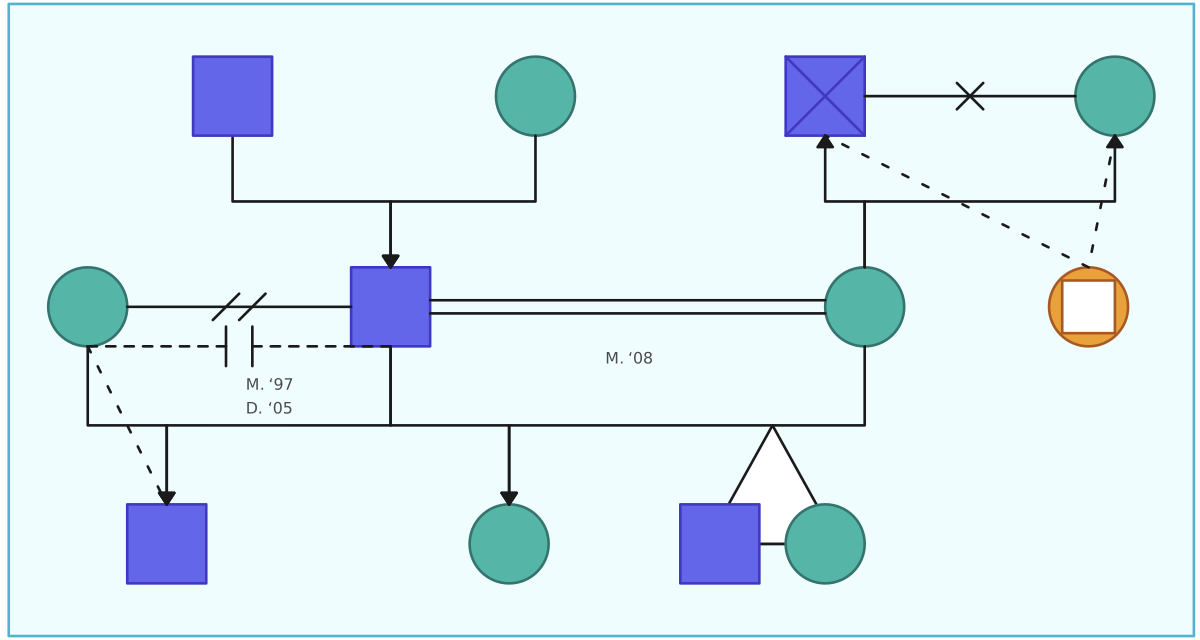
1. Family Relationship Genogram
A family relationship genogram maps out familial connections, including marriages, divorces, and sibling relationships. It helps therapists identify conflict areas, strong emotional bonds, and potential sources of distress within the family.

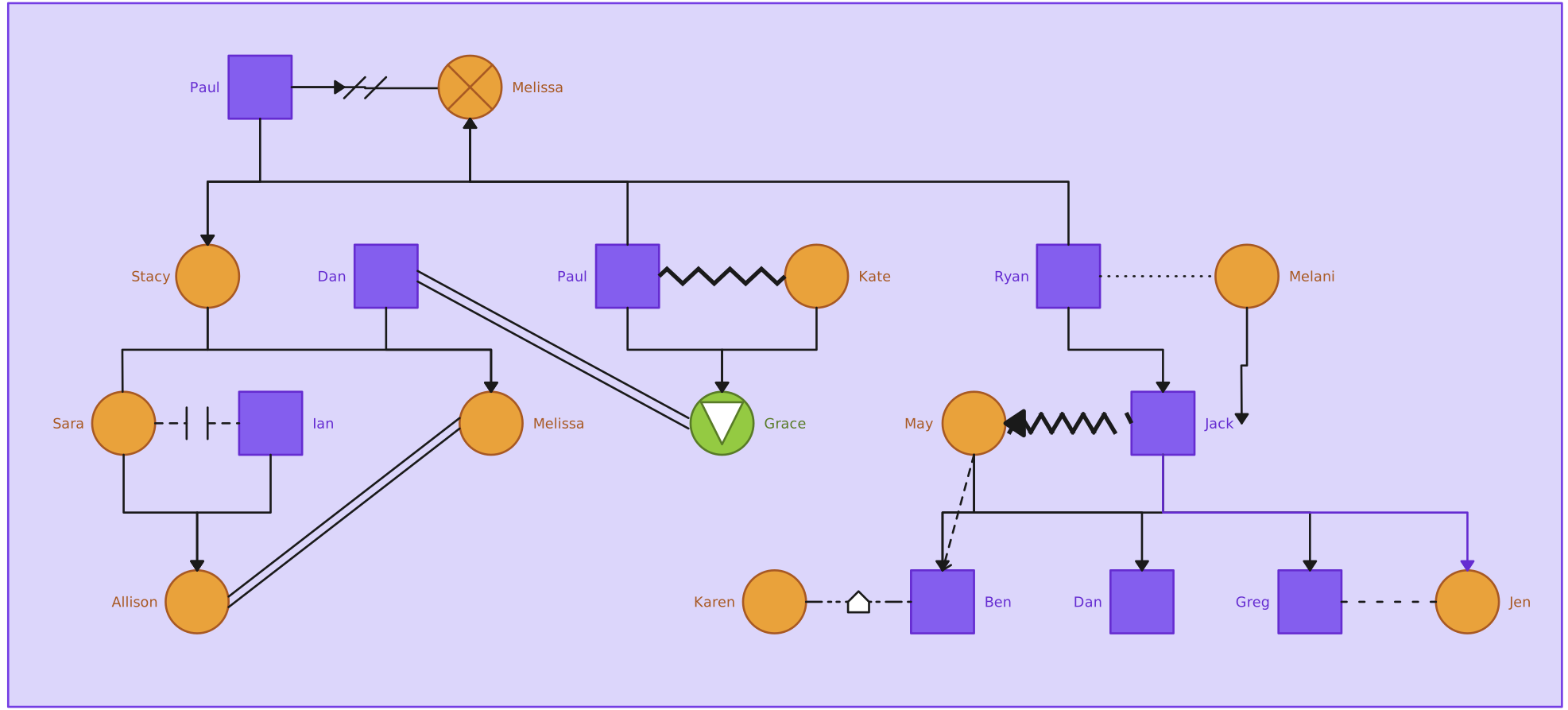
2. Emotional Relationship Genogram
This genogram illustrates emotional ties between family members, showcasing bonds such as love, hostility, or dependency. Therapists use it to assess emotional dynamics and address unhealthy attachment patterns.
3. Medical Genogram
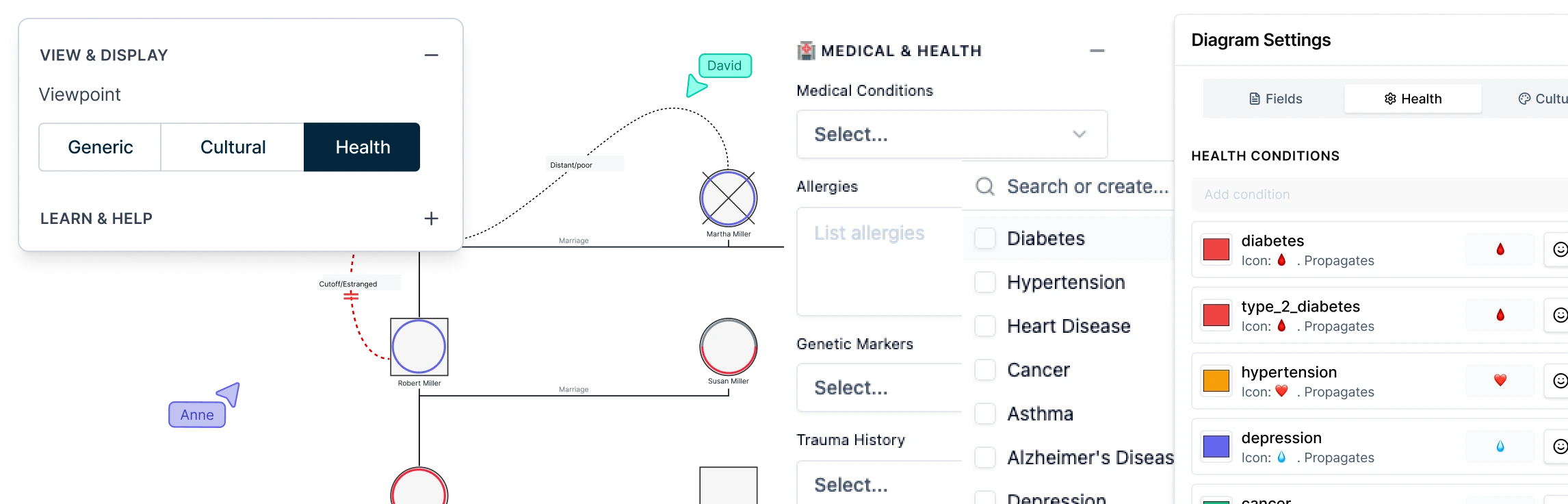
A medical genogram focuses on hereditary health conditions, such as diabetes, heart disease, or mental health disorders. It enables therapists and healthcare professionals to understand genetic risks and encourage preventive care.
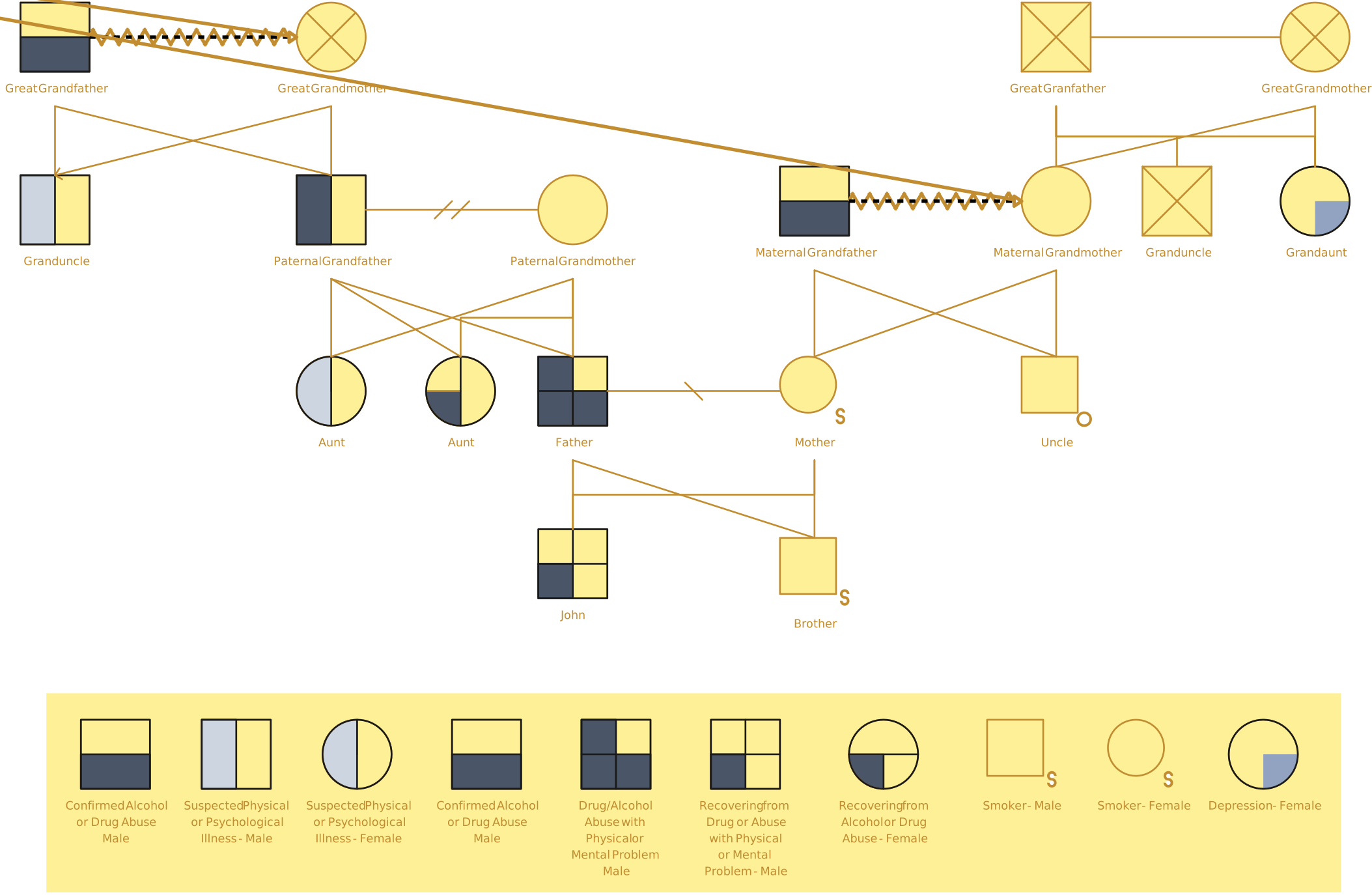
4. Substance Abuse Genogram
This genogram highlights substance use patterns across generations, identifying potential hereditary influences or environmental triggers. It helps therapists develop intervention plans for individuals struggling with addiction.

5. Trauma and Abuse Genogram
A trauma genogram maps instances of abuse, neglect, or significant trauma within a family. It aids therapists in recognizing intergenerational trauma and designing appropriate therapeutic interventions.
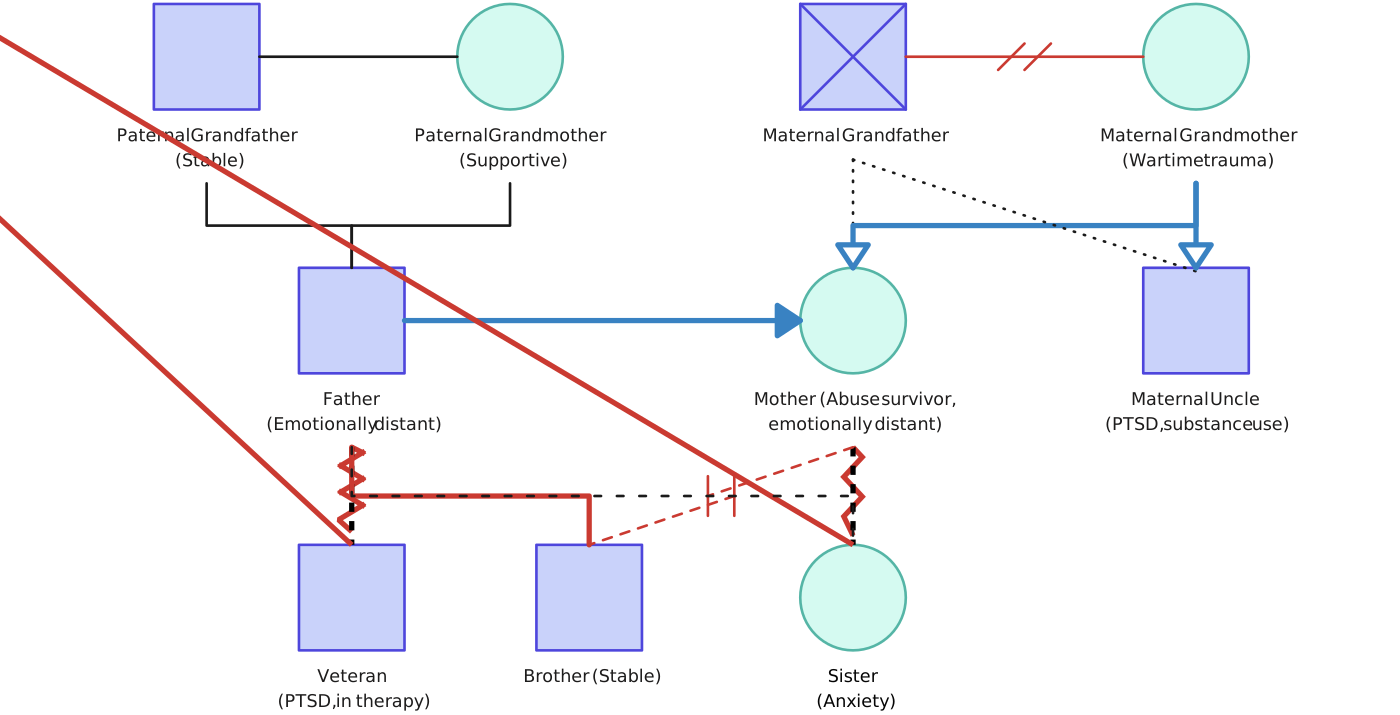
6. Mental Health Genogram
A mental health genogram provides insights into patterns of anxiety, depression, bipolar disorder, or other mental health conditions within a family. It enables therapists to create personalized treatment plans based on family history.
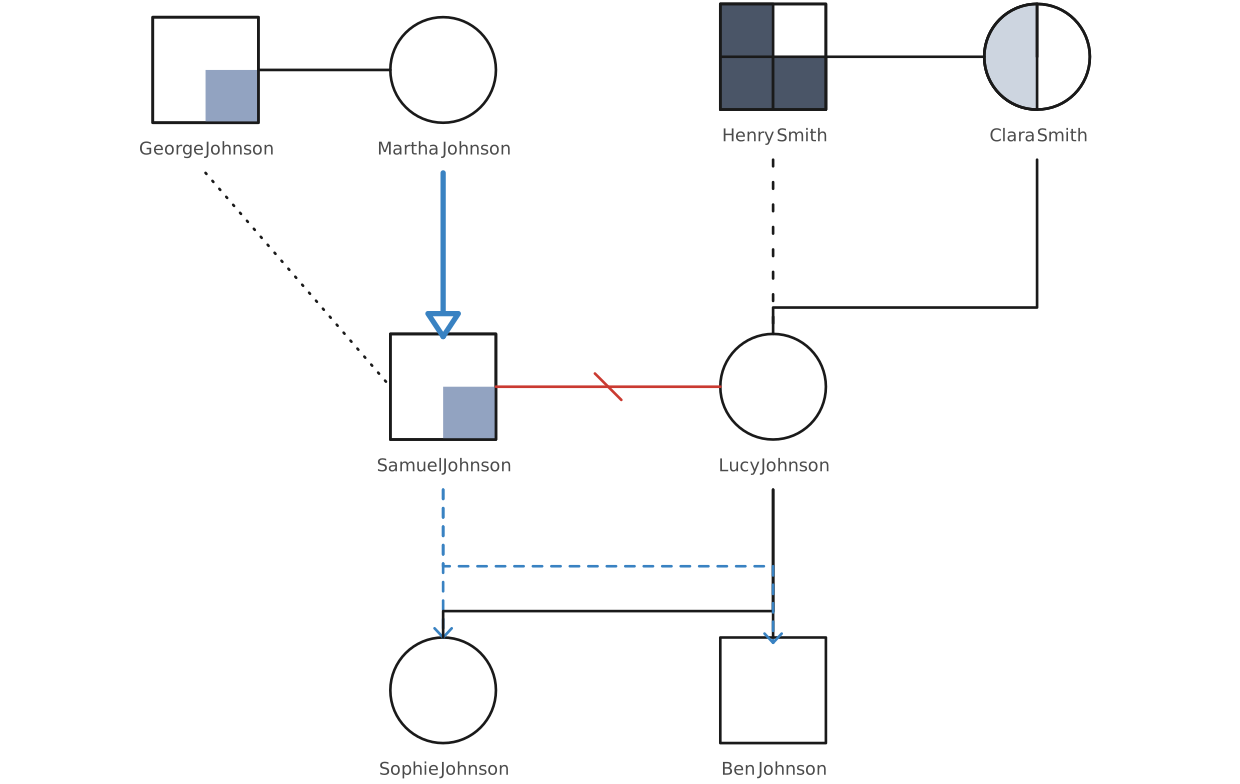
7. Parenting Style Genogram
This genogram evaluates parenting techniques and discipline styles passed down through generations. Therapists use it to address parenting concerns and improve family dynamics.
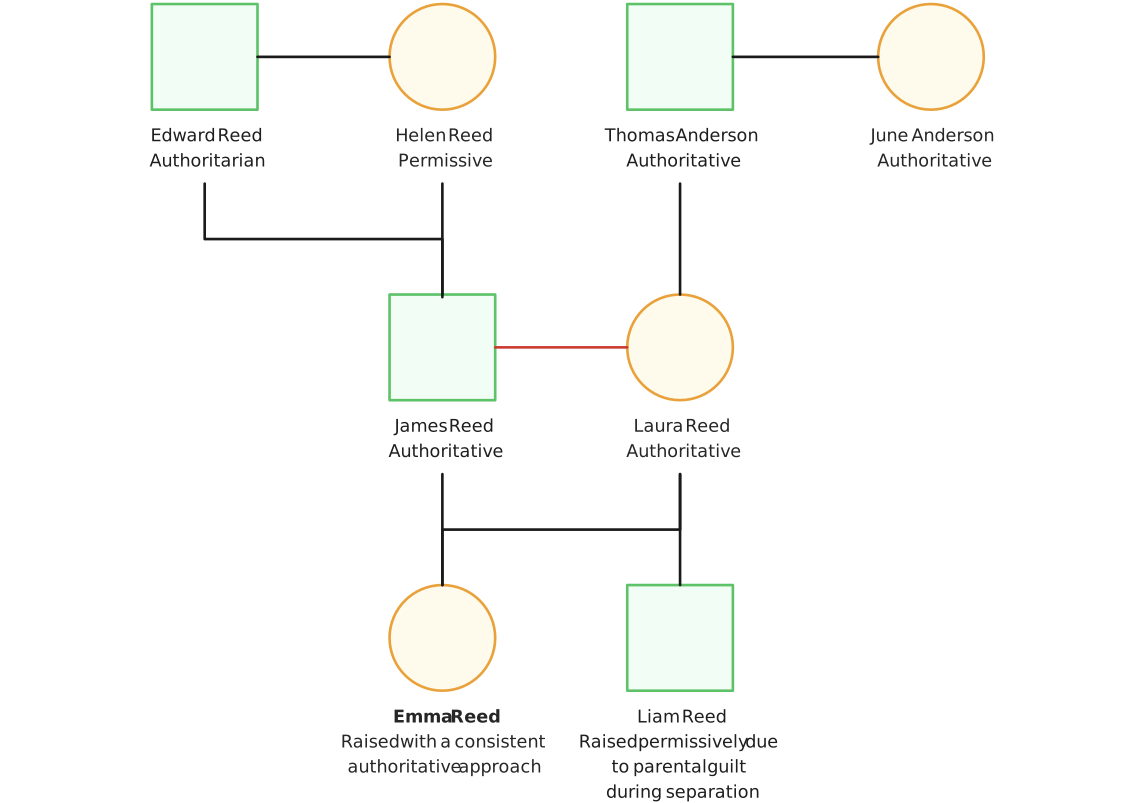
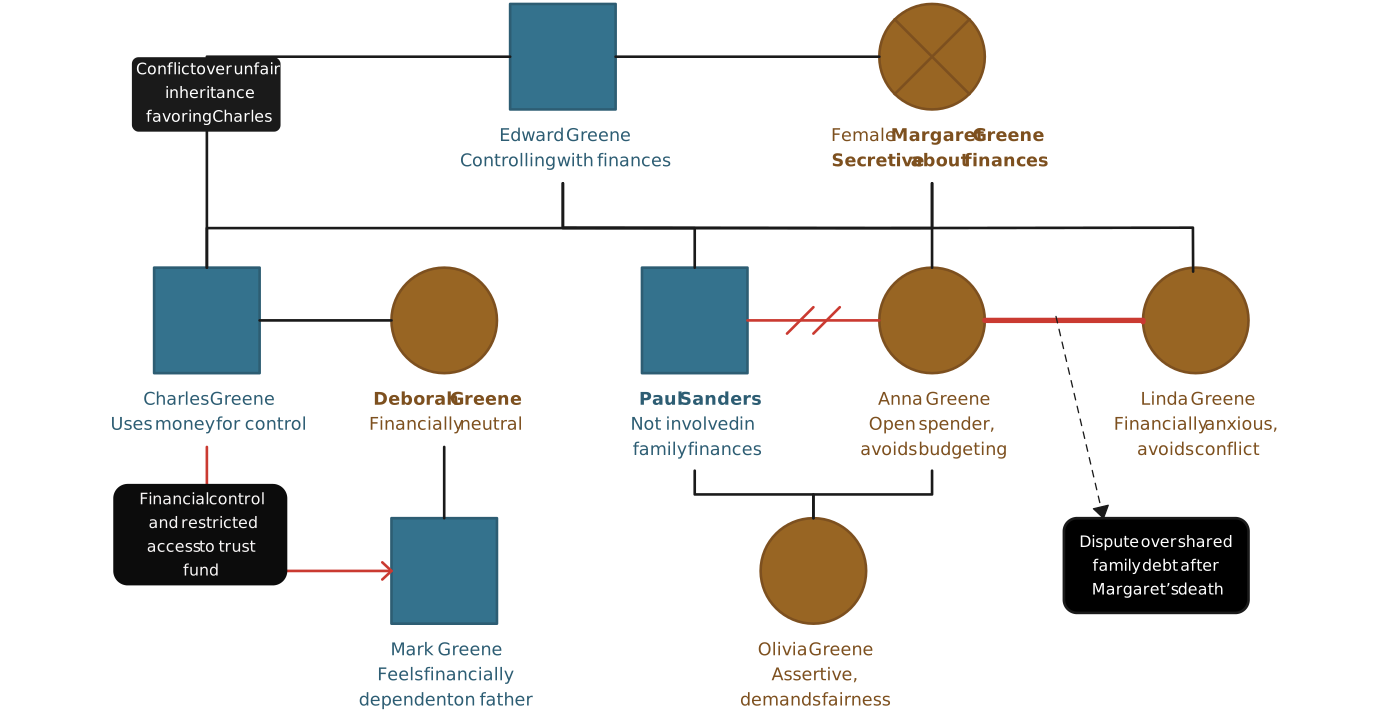
8. Conflict and Communication Genogram
A conflict genogram identifies recurring family disputes and communication barriers. By visualizing how conflicts arise and are managed, therapists can guide clients toward healthier interactions.
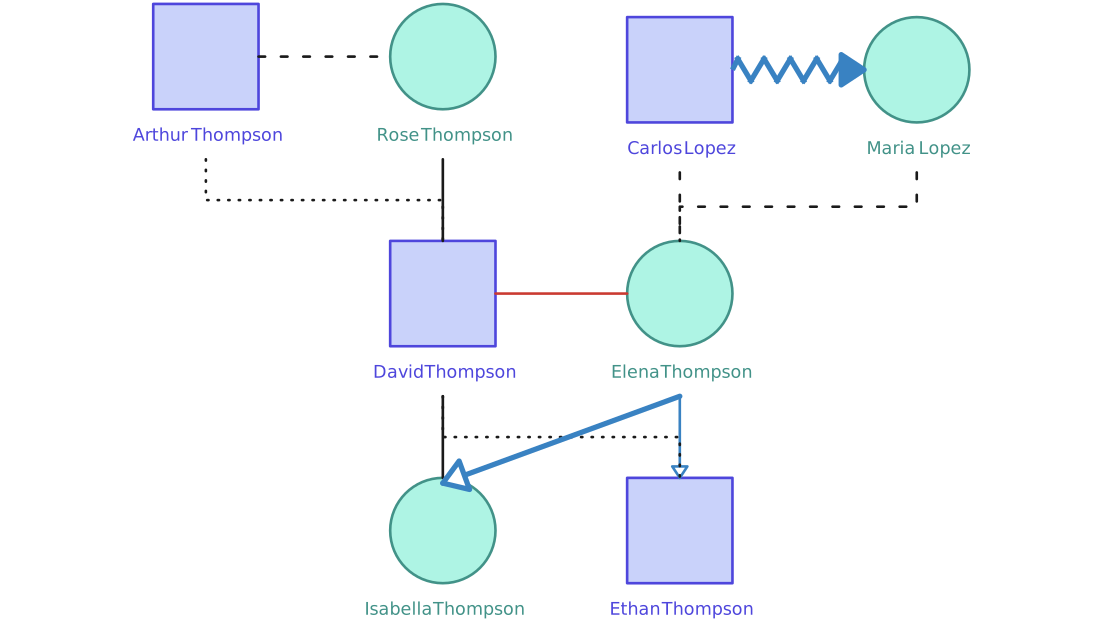
9. Attachment Style Genogram
An attachment style genogram helps therapists understand how attachment patterns, such as secure, anxious, avoidant, or disorganized attachments, have been transmitted across generations. It assists in addressing relational difficulties and building healthier connections.
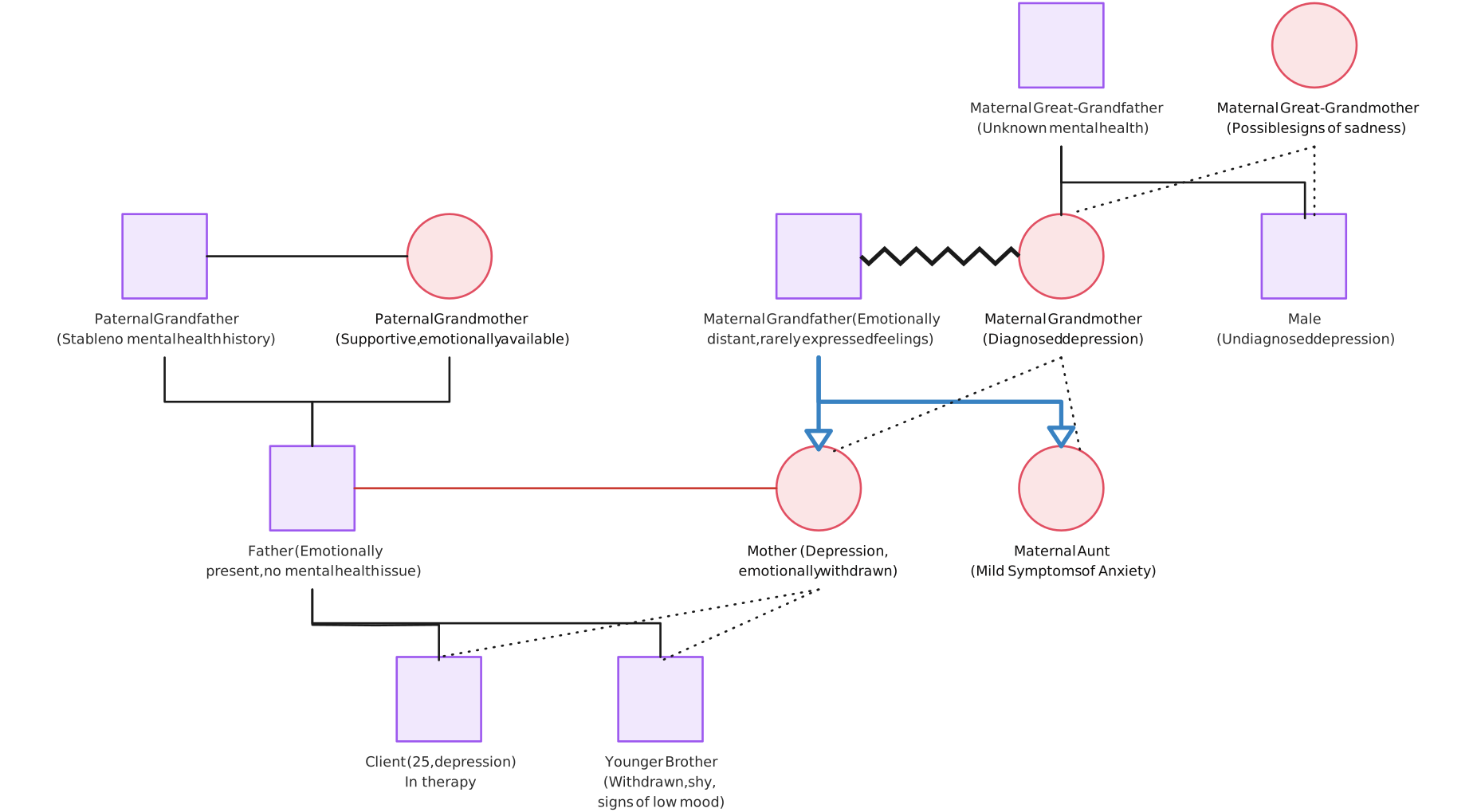
10. Intergenerational Trauma Genogram
This genogram highlights how trauma is passed down through generations, affecting family members in different ways. Therapists use it to uncover deep-rooted psychological wounds and develop strategies for healing.
Benefits of Using Genograms in Therapy
Genograms offer therapists valuable insights into a client’s background by:
1. Identifying Generational Patterns:
Genograms in therapy help recognize recurring themes such as trauma, addiction, or communication styles passed down through generations. Understanding these patterns allows therapists to intervene more effectively and break negative cycles.
2. Predicting Potential Challenges:
Enable therapists to anticipate possible behavioral or emotional struggles based on family history. By identifying predispositions, therapists can implement early intervention strategies to prevent issues from escalating.
3. Tailoring Therapeutic Interventions:
Genograms in therapy provide a clearer understanding of a client’s background, allowing for customized therapy approaches. Personalized therapy improves engagement and effectiveness, helping clients work through issues more efficiently.
4. Visualizing Family Dynamics:
Map out family roles, emotional bonds, and conflicts, making hidden dynamics more apparent. This visualization allows clients and therapists to gain a clearer perspective on relational influences and dysfunctions.
5. Addressing Unresolved Trauma:
Genograms in therapy highlight past traumatic events that may be affecting present mental health and relationships. By acknowledging and processing trauma, clients can work towards healing and emotional stability.
6. Improving Self-Awareness:
Empower clients to recognize how their familial influences shape their behaviors, thoughts, and emotions. Increased self-awareness can foster personal growth, emotional intelligence, and healthier decision-making.
7. Strengthening Communication:
Assist in improving interactions between family members by identifying communication barriers and relational patterns. Therapists can help clients develop better communication strategies to enhance relationships and resolve conflicts constructively.
By visualizing complex relationships and generational influences, genograms in therapy help both therapists and clients gain a deeper understanding of behavioral and emotional patterns, leading to more effective therapy outcomes.
How Therapists Can Easily Use Creately to Create Genograms in Therapy
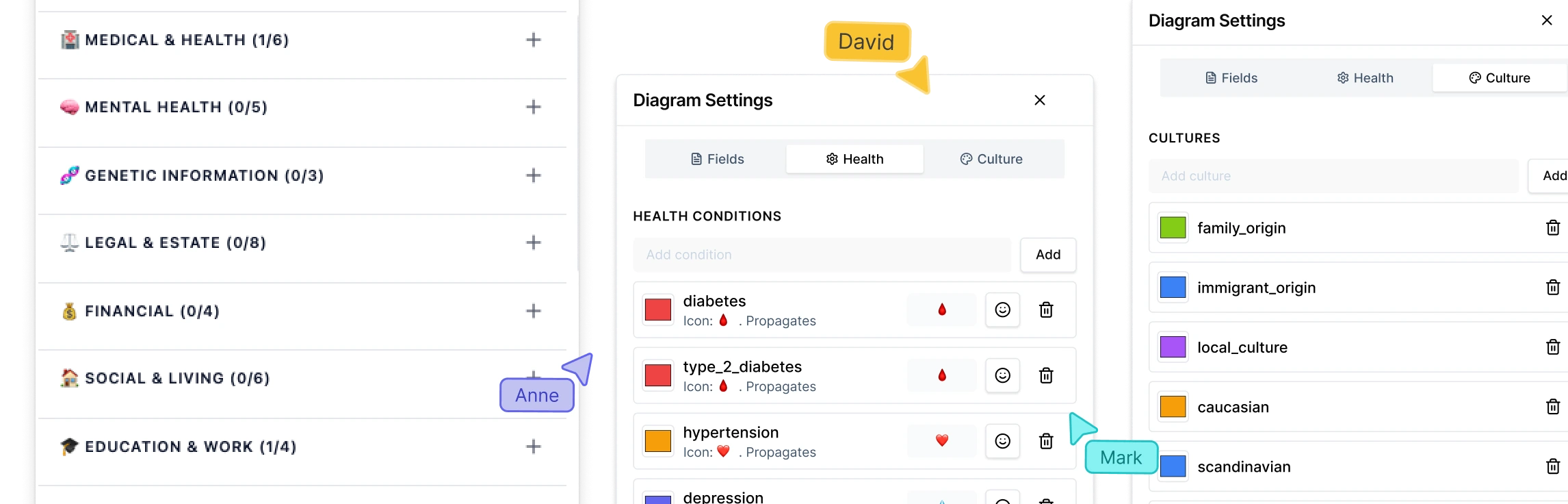
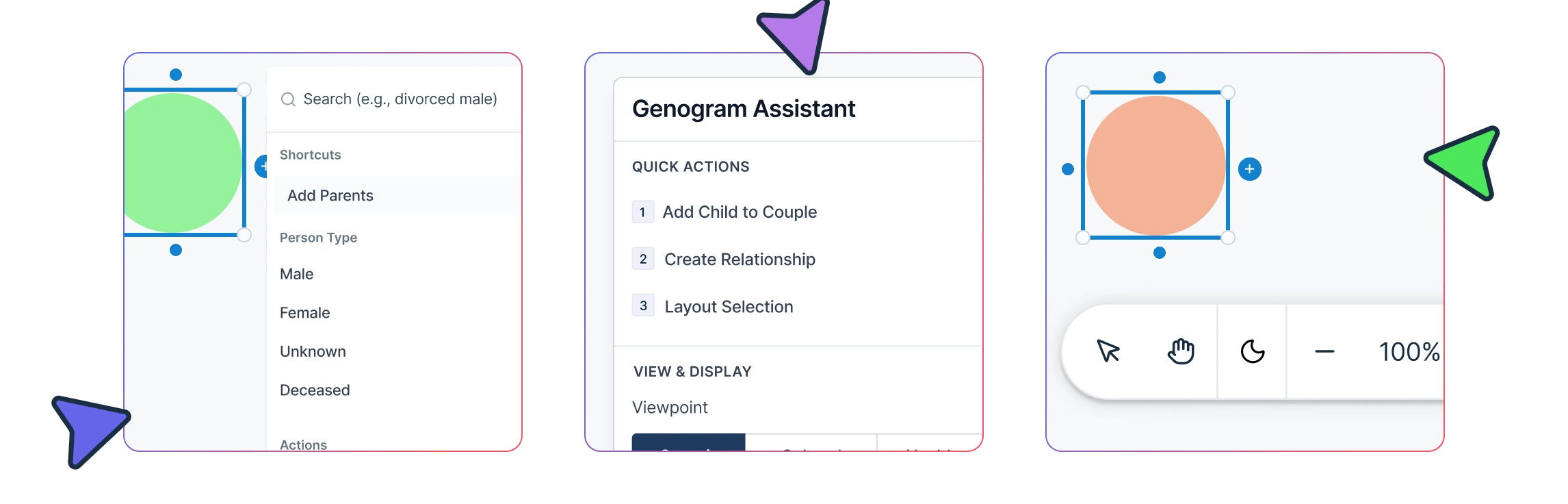
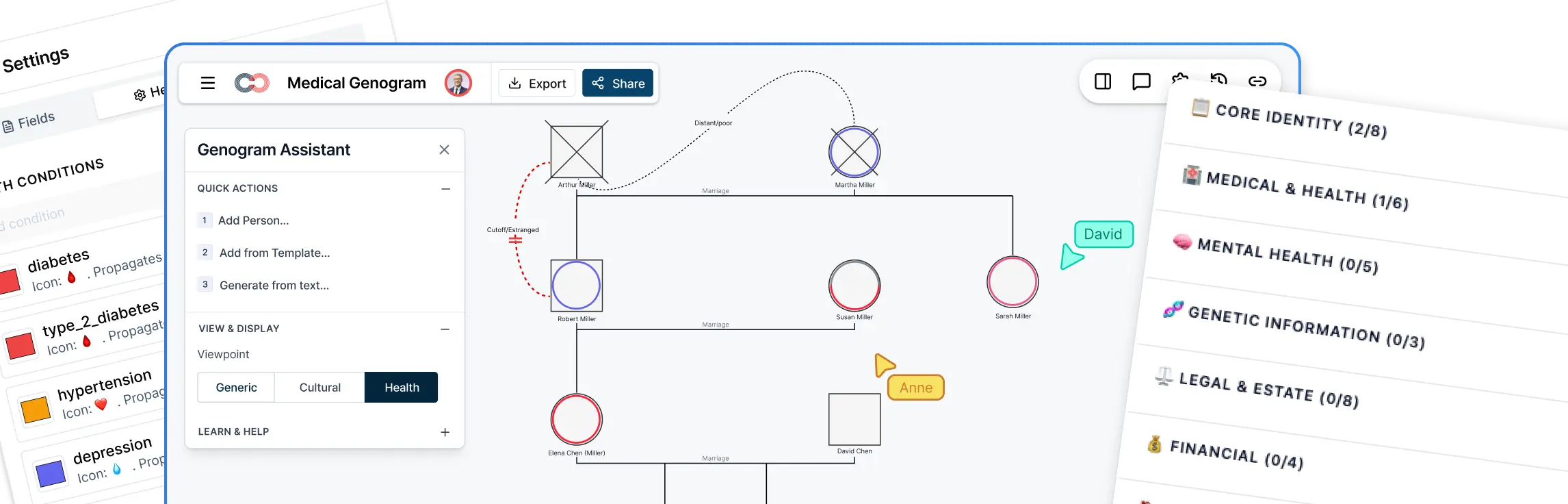
Creately offers a powerful set of features including extensive shape libraries of genogram symbols that make it easy for therapists to create, customize, and share genograms in therapy sessions. Whether you’re mapping out a simple three-generation family structure or exploring complex emotional relationships, Creately’s free genogram maker gives you the flexibility and tools you need.
1. Choose a Template:
Start with a customizable genogram template on Creately to streamline the process. With pre-built templates, therapists can quickly create detailed family maps without needing to start from scratch.
2. Add Family Members:
Use Creately’s drag-and-drop tools to include relevant family members and define relationships using extensive shape libraries for all genogram types. This intuitive functionality of our free genogram maker allows for easy structuring of complex family histories.
3. Incorporate Emotional and Medical Indicators:
Utilize Creately’s connectors to mark emotional bonds, medical conditions, and behavioral patterns. These markers help therapists capture and analyze key family dynamics effectively.
4. Customize for Specific Needs:
Adjust layouts, colors, and annotations to enhance clarity and usability. Personalizing genograms makes them more visually informative and tailored to the therapist’s specific requirements.
5. Collaborate and Share:
Use real-time collaboration features to involve clients and other professionals for a comprehensive analysis. Sharing insights with clients or consulting other professionals ensures a well-rounded therapeutic approach.
Helpful Resources
Learn what a genogram in psychology is, how to create one step-by-step, its key uses in therapy and assessment.
In this guide, we’ll walk you through a variety of genogram examples—from family and career to spiritual and cultural.
Learn what a mental health genogram is, how to create one, and how it’s used in clinical and personal contexts.
Explore the essential symbols used in genograms to represent everything from basic family structures to complex emotional and medical relationships.
References
Joseph, B., Dickenson, S., McCall, A. and Roga, E. (2022). Exploring the Therapeutic Effectiveness of Genograms in Family Therapy: A Literature Review. The Family Journal, 31(1), pp.21–30. doi:https://doi.org/10.1177/10664807221104133.
박정희 and Kim, Yoosook (2009). Genograms in Family Therapy Practice. Family and Family Therapy, 17(1), pp.31–55. doi:https://doi.org/10.21479/kaft.2009.17.1.31.
FAQs on Genograms in Therapy
What is a genogram in therapy?
Why Are Genograms Used in Therapy?
How are genograms used in therapy sessions?
What information is typically included in a therapy genogram?
Can genograms in therapy be used for individuals and couples?
How accurate are genograms in diagnosing mental health issues?
Are there specific genogram examples used in family therapy?
What is a mental health genogram?
Are there genogram case studies in therapy that show real outcomes?