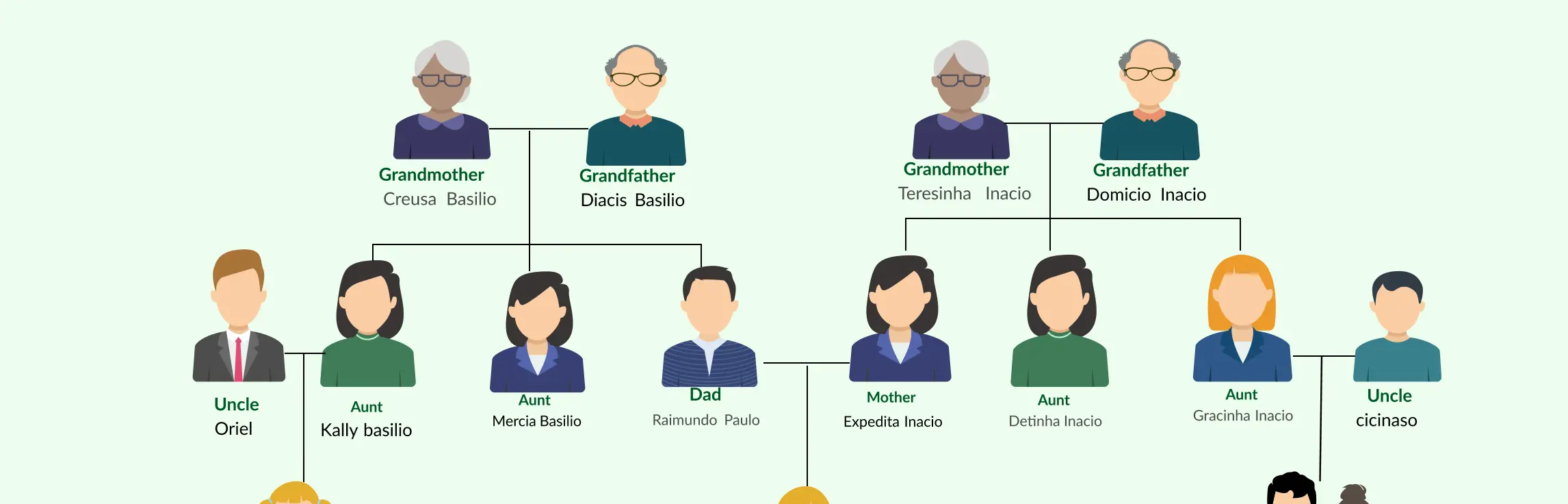
Ever tried tracing your family history only to end up with a tangle of names, dates, and scattered notes that make your head spin? That’s where family tree software comes in, transforming a chaotic jumble of facts into a clear, organized, and interactive family tree that’s easy to explore and share.
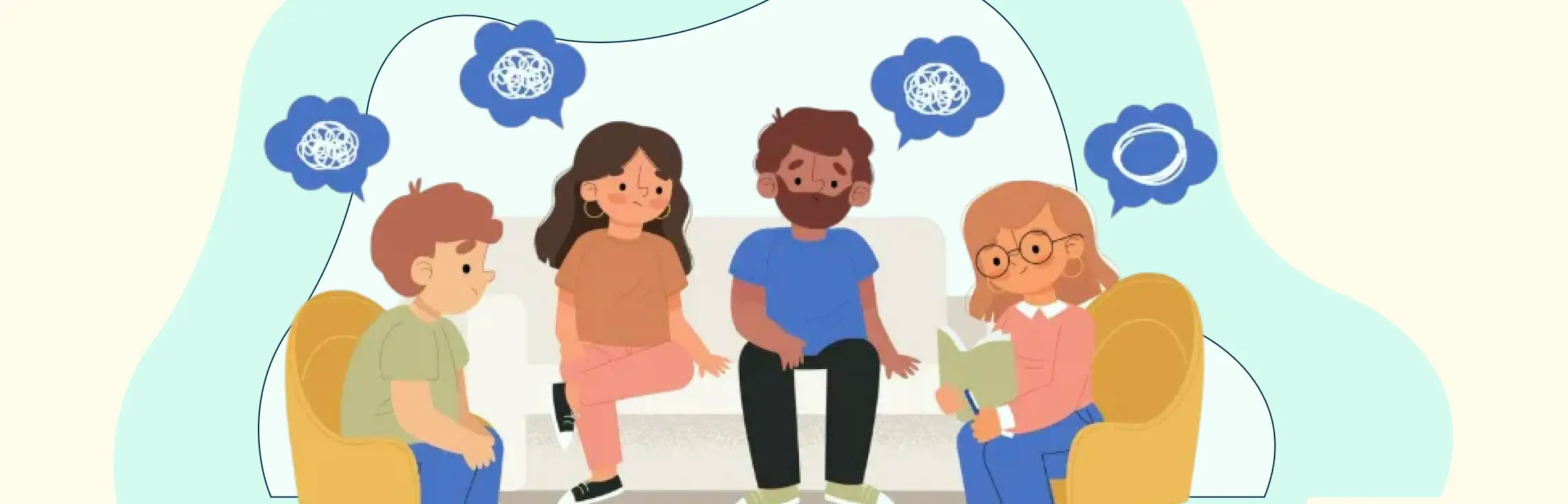
Family therapy can be messy. Multigenerational patterns, hidden loyalties, unspoken debts, and conflicting expectations often leave both clients and therapists feeling overwhelmed. That’s where contextual family therapy shines, it provides a structured, ethically grounded approach to understanding fairness, trust, and accountability across generations. In this guide, we’ll explore the core concepts, dimensions, and practical techniques of contextual family therapy, while showing how visual tools like genograms and family trees can help therapists map complex relationships, reduce overwhelm, and bring clarity to even the most complicated family systems.
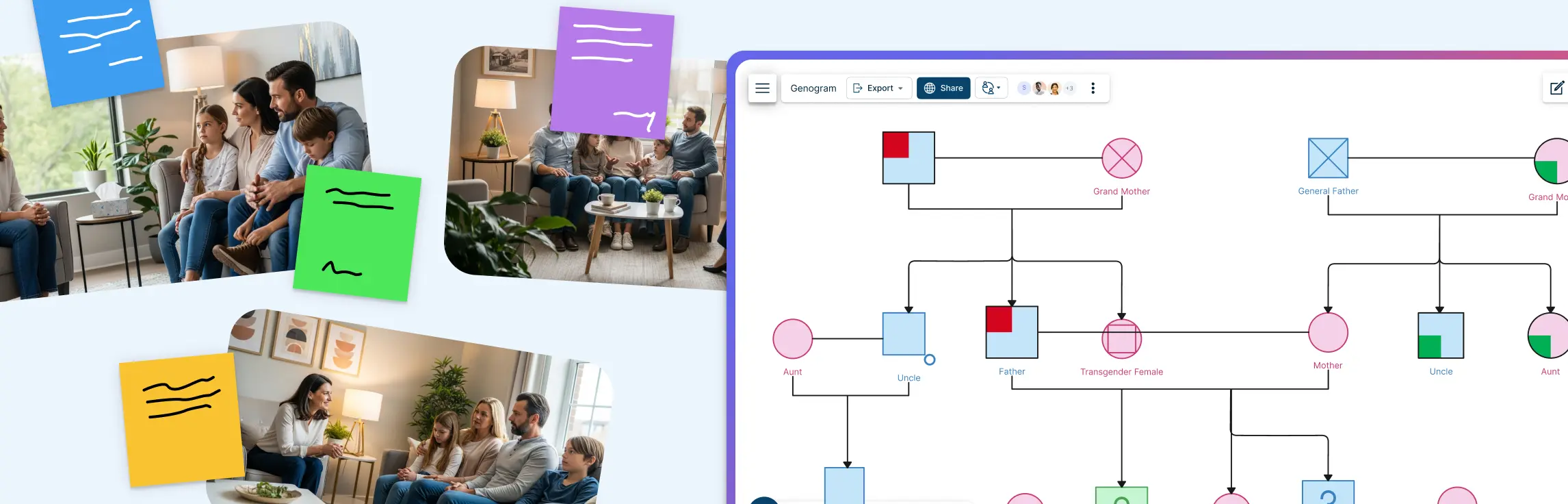
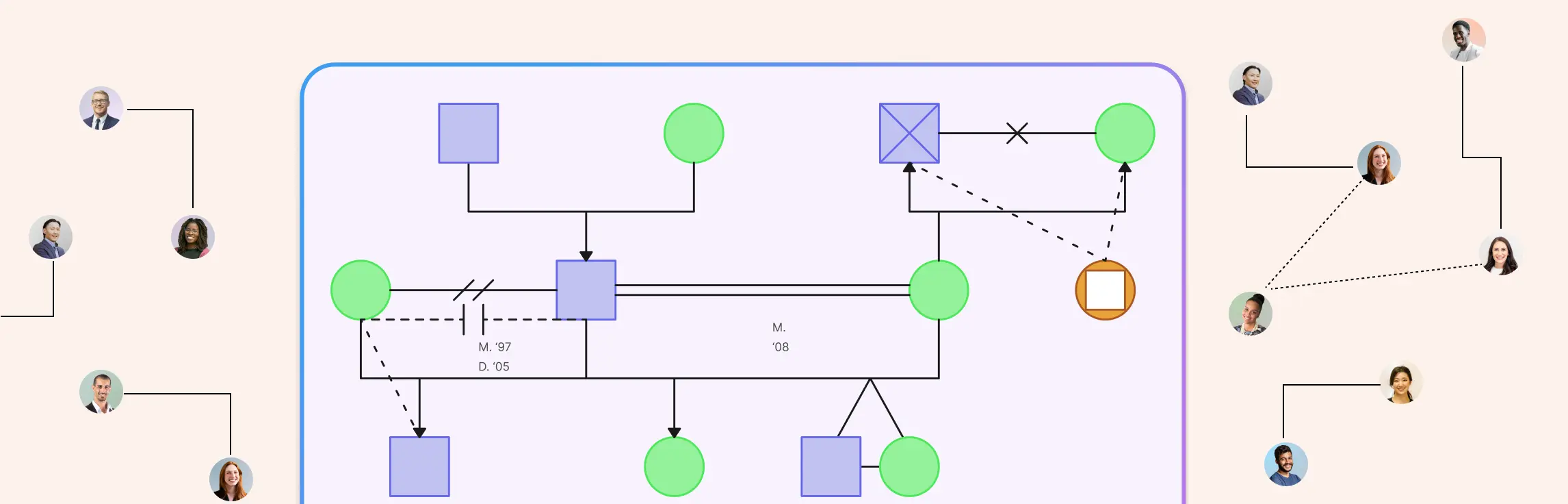
Therapy sessions can quickly become overwhelming when notes are scattered, family patterns are hard to decode, and critical context is missing. That’s where genograms in therapy come in. These visual maps go beyond traditional family trees, revealing relationships, emotional dynamics, and intergenerational patterns in a way that’s fast, intuitive, and actionable. In this guide, we’ll explore what genograms are, why they’re so useful, the key elements that make them effective, practical ways to use them in therapy sessions, and how tools like Creately simplify the process, helping therapists and clients gain clarity, insight, and meaningful breakthroughs.
Juggling scattered notes, multiple therapy models, and complex family dynamics can be frustrating. Integrative family therapy streamlines this process by combining approaches like CBT, narrative, and attachment-focused methods. With visual tools such as genograms, family maps, and timelines, therapists can quickly uncover patterns, track progress, and deliver personalized care, bringing clarity, speed, and insight to every session.
Therapists often struggle with scattered notes, fragmented stories, and the challenge of making sense of complex family dynamics. Narrative family therapy offers a structured, empowering approach that helps families reframe their stories, uncover patterns, and build stronger connections. By combining this approach with visual tools like genograms and eco-maps, therapy sessions become clearer, faster, and far more actionable, turning abstract problems into insights that families can see, understand, and act on.
Working with families can be rewarding, but it often comes with frustrations. Scattered notes, complex family histories, and hard-to-track patterns can make therapy feel overwhelming. That’s where family therapy models come in. They provide structured approaches to understanding relationships, resolving conflicts, and promoting healthier dynamics.
If you’ve ever felt overwhelmed by scattered notes, complex family stories, or the challenge of tracking relationships in therapy, you’re not alone. Many therapists, social workers, and educators struggle to make sense of intricate family dynamics without a clear visual approach. Functional Family Therapy helps improve communication, address behavioral challenges, and strengthen family dynamics, but even proven techniques are easier to apply with a clear visual approach. Genograms and family trees turn scattered notes into actionable insights, saving time, reducing frustration, and helping families build stronger, healthier connections.
Therapists and students often feel overwhelmed by scattered case notes and complex family dynamics, making it hard to plan effective interventions quickly. This guide breaks down Strategic vs Structural Family Therapy in a clear, approachable way, helping you understand the purpose, techniques, and differences between the two models. You’ll also discover how visual mapping tools like genograms and family tree diagrams can simplify session prep, reveal patterns at a glance, and make your workflow faster and more organized. With Creately’s intuitive templates, creating these visual maps becomes effortless, so you can focus on what truly matters: guiding families toward healthier, functional relationships.
When you’re working with complex family histories, scattered case notes and long, tangled stories can make it nearly impossible to see the bigger picture. Therapists often feel the frustration firsthand, trying to track emotional legacies, repeating roles, and intergenerational trauma without a clear visual map. Transgenerational Therapy offers a powerful way to understand how patterns move across generations, and when paired with tools like genograms, the work becomes even clearer and more actionable. This guide walks you through the core concepts, models, and patterns behind this approach, plus how modern tools make it easier to support your clients with clarity and confidence.