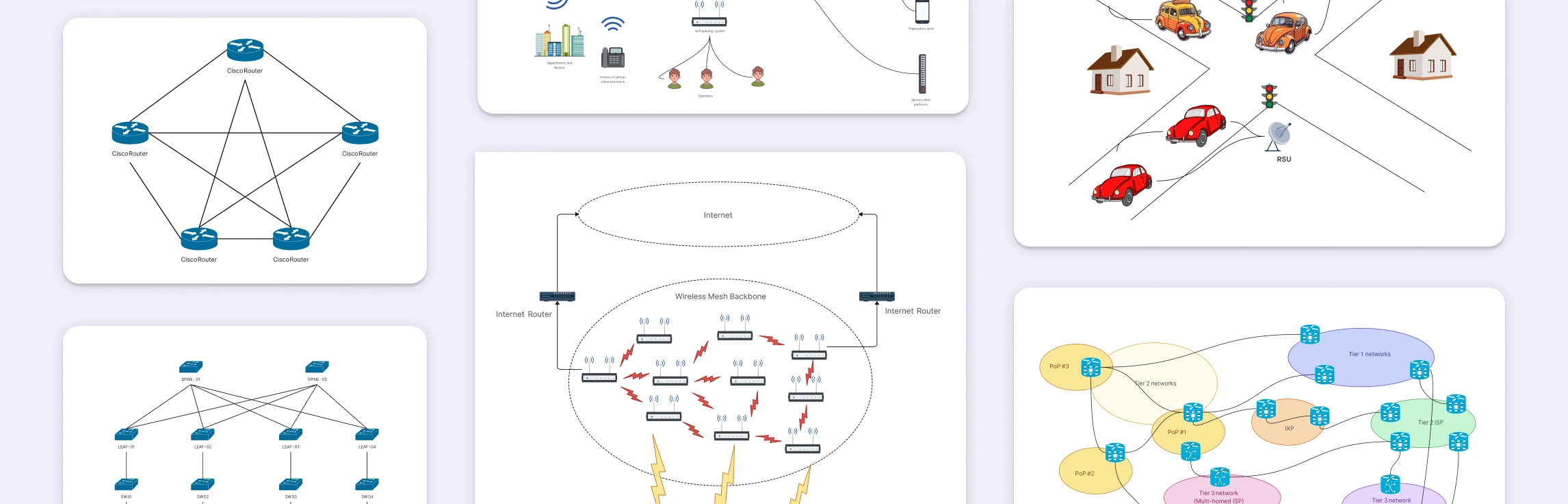
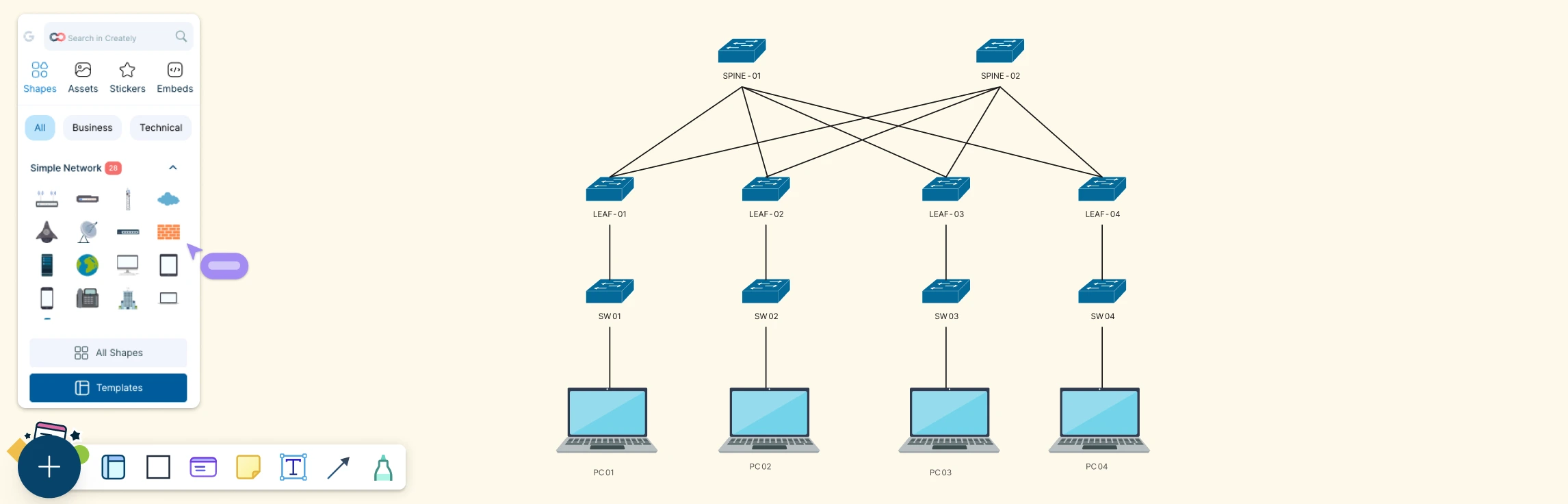
A mesh topology connects devices through multiple redundant paths instead of a single central link, making networks more reliable, fault-tolerant, and scalable. This guide covers real world mesh topology examples, from internet backbone routing and wireless mesh networks to home Wi-Fi systems, data center interconnections, emergency communication networks, and peer-to-peer architectures to help you understand how mesh designs work in practice and draw accurate network diagrams.
A partial mesh network is a practical approach to building reliable networks without the overhead of fully connecting every device. This guide explores why partial mesh networks are used, where they appear in real-world architectures, and how they compare to full mesh topology designs, helping you understand and choose the right topology with confidence.