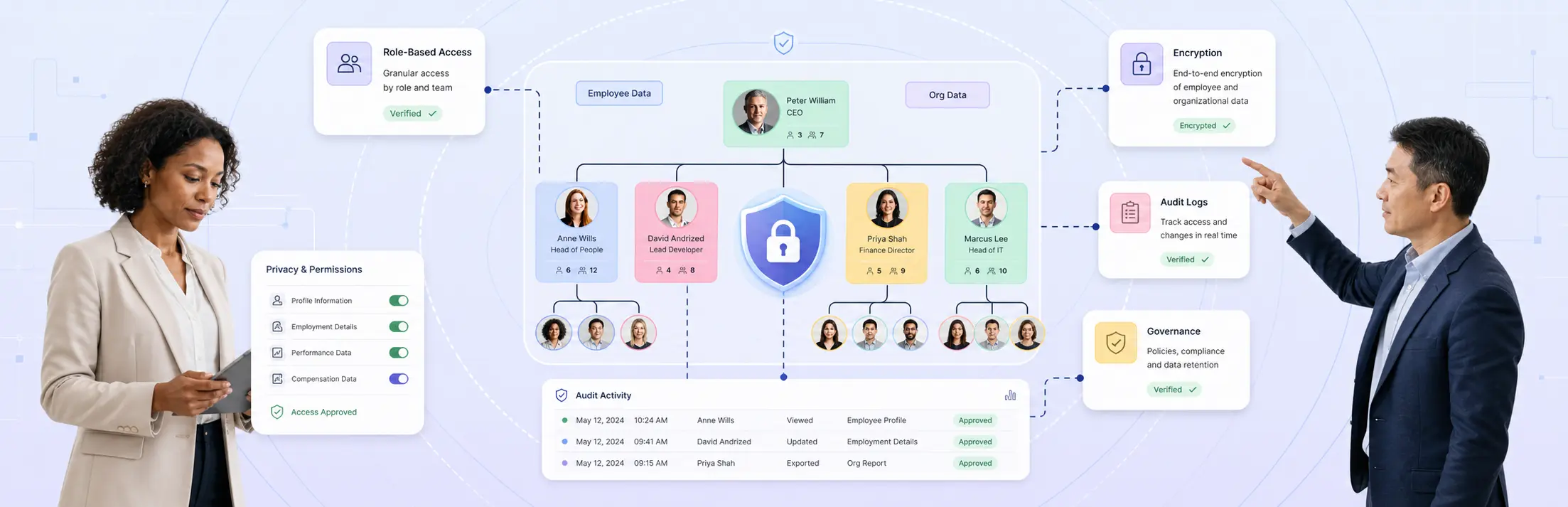
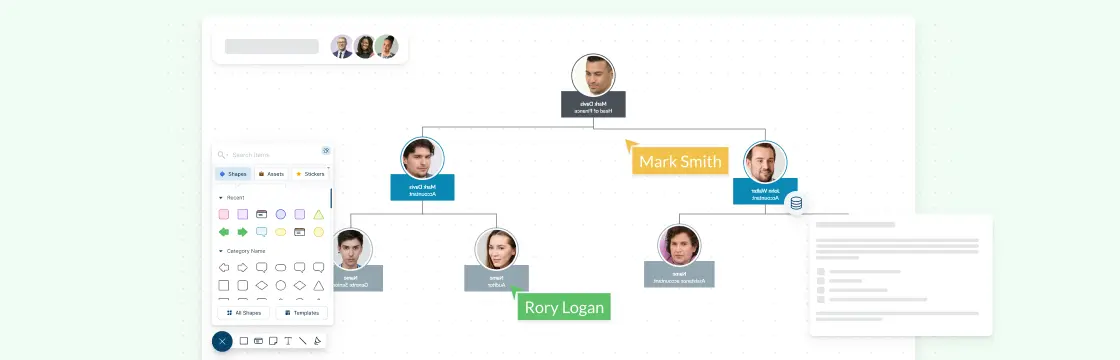
Creately Atlas is designed for HR and people operations teams that need an always-current view of employee and organizational data. Atlas is built on Creately’s platform security framework, which includes AES-256 encryption for document content at rest, TLS 1.2 or higher for data in transit, role-based access controls, least-privilege access practices, regional hosting options, and formal privacy processes. If you are evaluating Atlas for sensitive organizational data, these are the controls to review first.
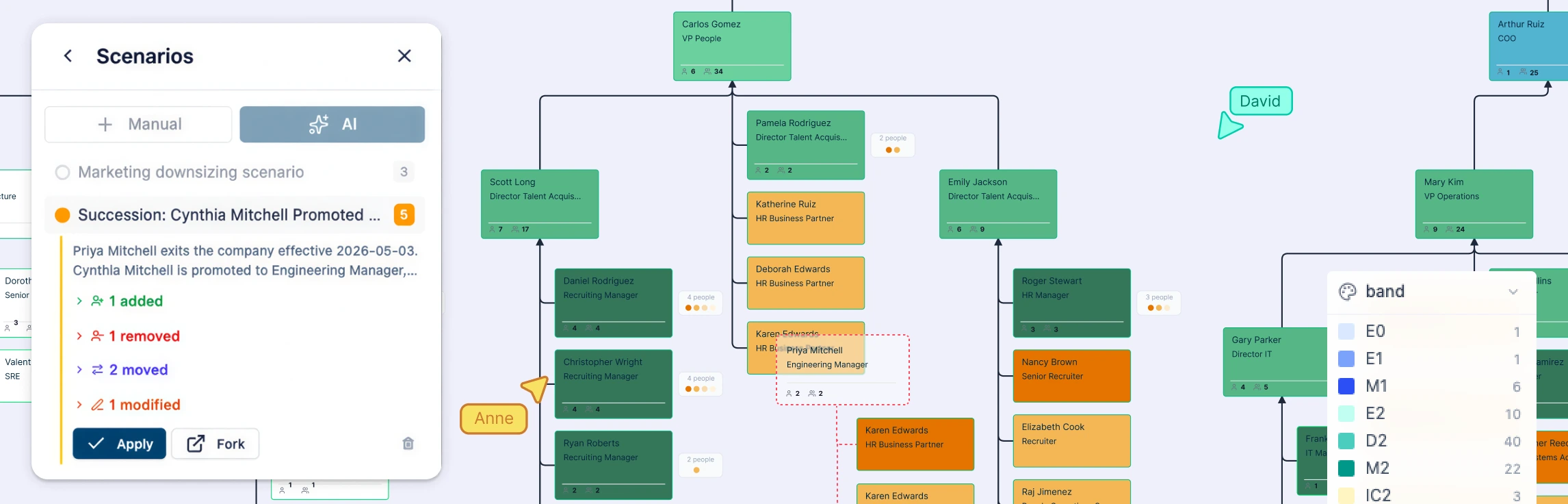
Mergers and acquisitions rarely fail because the deal logic is wrong—they fail during integration. Unclear reporting lines, overlapping roles, ambiguous authority, and misaligned structures make it difficult for leaders to execute even the strongest strategies. An org chart, when used correctly, becomes one of the most effective tools for managing this complexity.
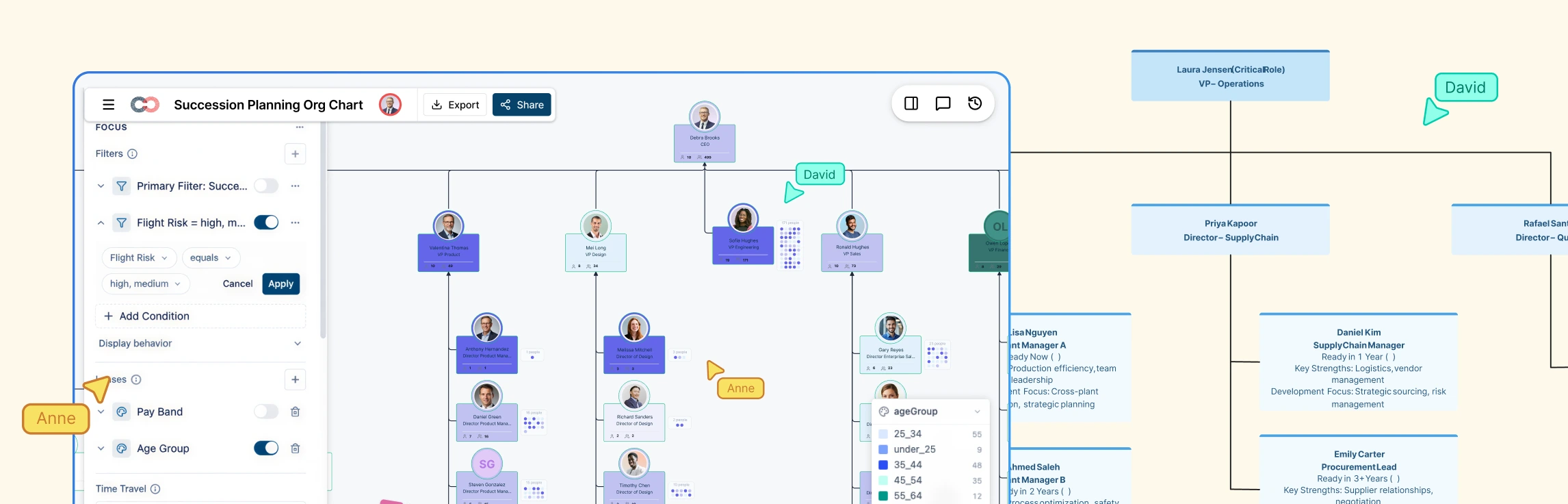
Leadership transitions rarely fail because they’re unexpected. They fail because organizations can’t clearly see who’s ready, where the gaps are, and what happens if a key leader leaves. This guide explains when to use succession planning org charts, what problems they solve, and how to build one step by step. It also covers best practices and common pitfalls so succession planning becomes an ongoing decision system instead of a once-a-year exercise grounded in positions, successors, scenarios, and secure visibility.
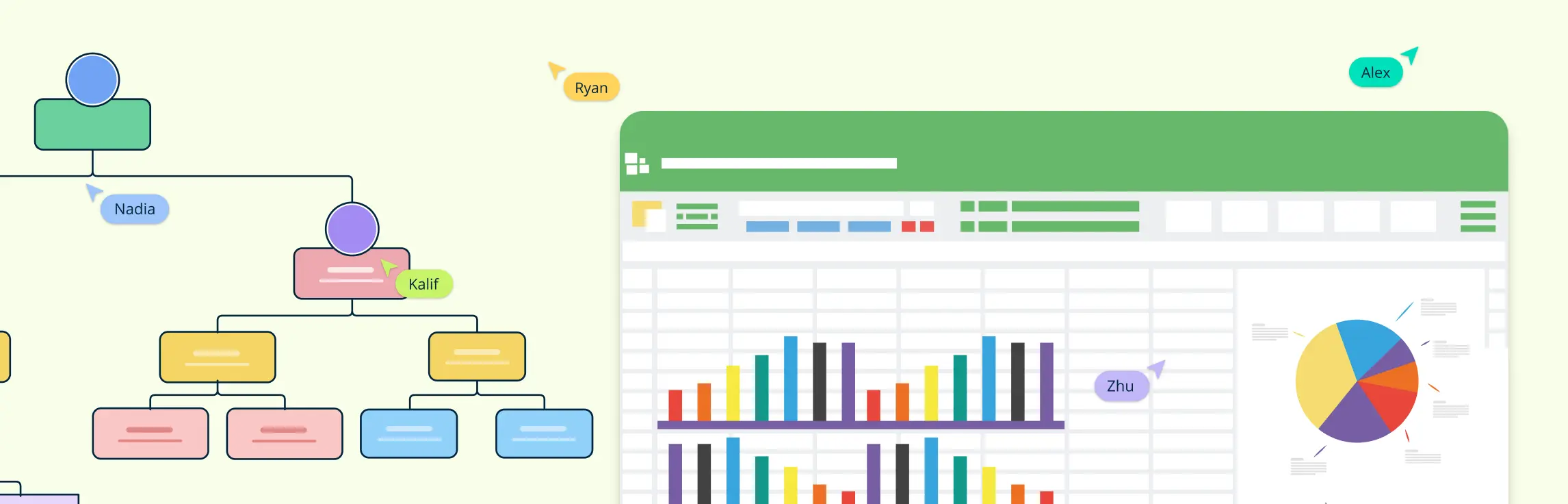
To generate an org chart from a spreadsheet, start with a clean list of employee names, titles, and reporting lines. Then import that table into a tool that can visualize the hierarchy, check the structure for mismatches, and adjust the layout for clarity. This guide compares common spreadsheet-based methods and explains when a dedicated org chart software tool helps teams validate imported records, organize employee fields, and review proposed reporting changes.
HR managers in companies have been using organizational chart software for decades to fulfil a very basic but significant function. These managers have used org charts to form the modus operandi of a company, where questions of “Who is Who?” and “Who does What?” are answered. Organizational behavioral experts are aware of the issues that arise when lines are vague when it comes to job roles and responsibilities. Org charts need to be properly used to define the function and role of every single individual in a company so that there is room for accountability.