Business process analysis (BPA) is a structured examination of how a defined process currently works, how it performs against its objectives, and what evidence supports a change. It combines current-state mapping, operational data, stakeholder knowledge, root-cause analysis, and outcome measurement.
The purpose is not simply to redraw a workflow. A useful analysis identifies process boundaries, owners, handoffs, decisions, exceptions, systems, inputs, outputs, controls, and performance measures. This guide explains when to conduct BPA, how to perform it, which visual tools support different questions, and how to keep the resulting process documentation current.
- What is Business Process Analysis
- Business Process Analysis vs Business Analysis
- When to Conduct a Business Process Analysis
- Business Process Analysis Steps
- What Tools to Use when Performing a Business Process Analysis
- Why a Business Process Analysis is Important
What is Business Process Analysis
Business process analysis is a detailed, multi-step examination of a business process. Analysts document the current state, measure performance, investigate problems and their causes, compare improvement options, and evaluate results after an approved change is implemented.
A current-state map is an important starting point, but it must be validated with the people who perform and receive the work. Combine it with evidence such as cycle time, queue time, volume, error or rework rate, cost, capacity, customer feedback, and process variants. A diagram can reveal where to investigate; it does not prove the cause of a problem by itself.
BPA may be conducted for a specific problem or as part of continuous improvement. The accountable process owner should maintain the process definition, supporting context, review cadence, and relevant measures so the documentation remains a living operational reference rather than a one-time project artifact.
Business Process Analysis vs Business Analysis
Business process analysis and business analysis (BA) are related but not interchangeable. BPA focuses on understanding and improving a defined process. The International Institute of Business Analysis defines business analysis more broadly as enabling change by defining needs and recommending solutions that deliver value to stakeholders within a given context. BA can include strategy, requirements, capabilities, data, technology, and process work.
| Aspect | Business Process Analysis | Business Analysis |
|---|---|---|
| Focus | How a defined process operates and performs | A business need, change, or opportunity in its wider context |
| Objective | Understand the current process and evaluate improvements | Recommend solutions that deliver stakeholder value |
| Scope | Process boundaries, activities, owners, handoffs, rules, data, systems, controls, and measures | Strategy, requirements, capabilities, processes, data, technology, stakeholders, and solutions |
| Typical evidence | Process maps, observations, interviews, system data, timing, defects, volume, and customer feedback | Needs, stakeholder analysis, requirements, business cases, models, risks, and solution evaluations |
| Typical output | Validated current state, findings, root causes, future-state options, and measures | Defined need, requirements, options, recommended solution, and value assessment |
| Relationship | May contribute process findings to a wider change initiative | May include BPA when a process change is part of the solution |
When to Conduct a Business Process Analysis
Conduct BPA when a process problem, change, risk, or improvement objective is important enough to justify focused analysis. Prioritize processes with a clear owner, meaningful impact, available evidence, and a decision that the analysis can inform.
Startup or launch: Map the proposed process, assumptions, ownership, and handoffs before launch, then compare it with observed performance after operations begin.
Process or technology change: Analyze the current state, affected roles and systems, risks, requirements, and future-state options. BPA supports change planning but does not ensure a smooth implementation.
Performance issues: If there are noticeable inefficiencies, delays, or performance issues within the organization, conducting a BPA can help identify the root causes and propose improvements.
Mergers and acquisitions: Compare process variants, controls, systems, ownership, and customer impacts before deciding what to standardize, retain, or redesign.
Compliance requirements: Make obligations, controls, evidence, roles, and gaps visible for qualified review. Analysis supports compliance work but does not establish compliance by itself.
Customer complaints or feedback: If there’s an increase in customer complaints or feedback indicating dissatisfaction with processes, a BPA can pinpoint areas for improvement to enhance customer satisfaction.
Employee training or onboarding: Validate the process before using it as training content, and keep instructions connected to the current owned process documentation.
Business Process Analysis Steps
BPA involves a structured approach to understand, evaluate, and improve processes within an organization. Here are the key steps:


1. Define objectives
State the problem, desired outcome, stakeholders, baseline, decision to be made, and measures of success. Avoid broad goals such as “improve efficiency” without defining the relevant time, cost, quality, risk, or customer measure.
2. Identify processes
Select the process and name its accountable owner. Define its trigger, end result, customers, inputs, outputs, scope boundaries, interfaces, and important variants so the analysis remains focused.
3. Create a process map
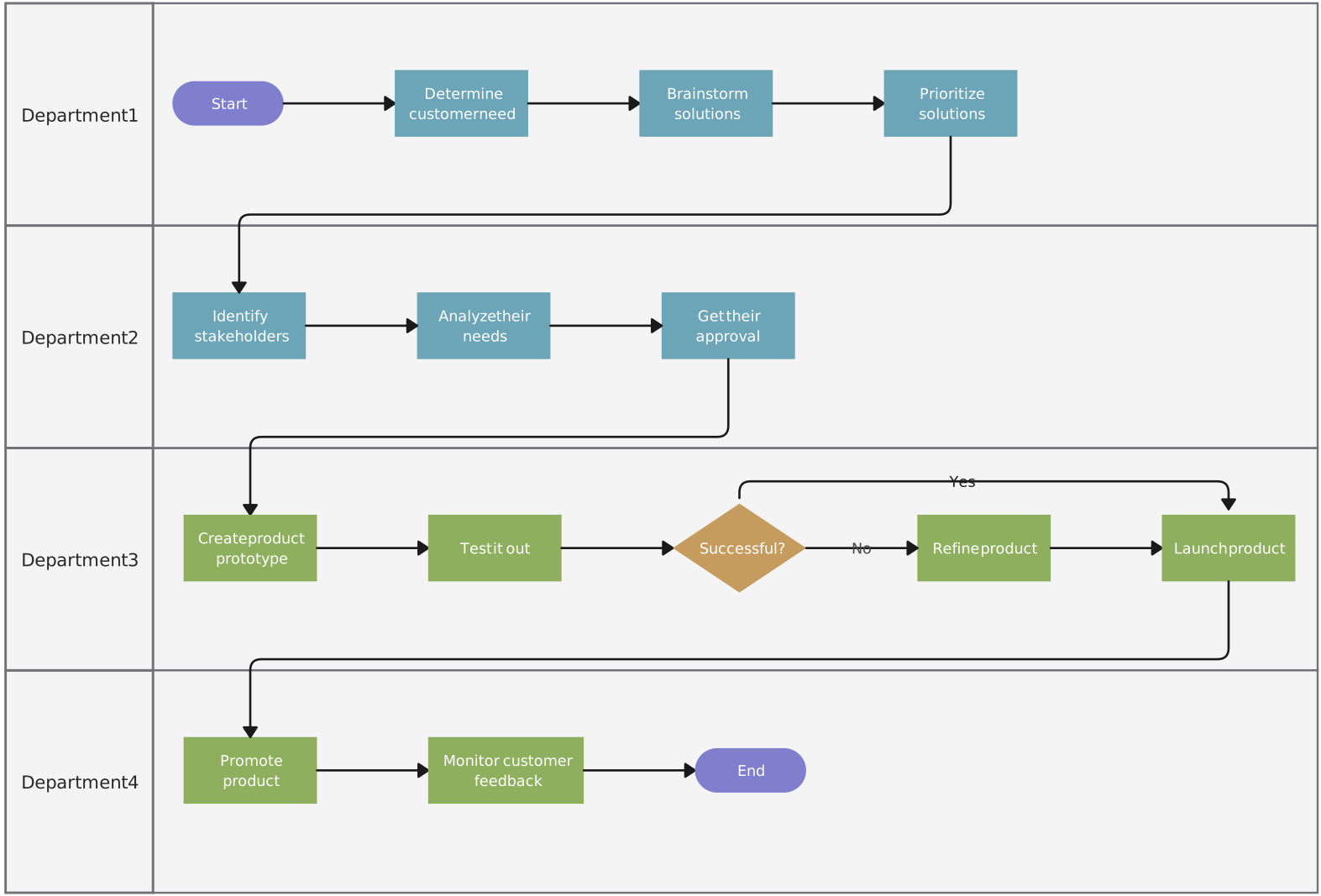
Document the process as it currently operates using a flowchart, swimlane diagram, BPMN model, or another suitable notation. Include activities, decisions, owners, cross-functional handoffs, exceptions, systems, controls, and information flow. Validate the map with frontline participants rather than relying only on documented procedures.
With Creately Process, teams can add structured properties such as owner, status, duration, systems, trigger, SLA, and tags to relevant process objects. Notes, links, and files can keep supporting context close to the steps they explain.
4. Gather data
Create a data plan tied to the objective. Combine qualitative evidence from interviews, observation, customer feedback, and document reviews with quantitative evidence from appropriate systems. Record definitions, time periods, sample sizes, and known data-quality limitations.
5. Identify issues
Compare process performance with the baseline and objective. Look for bottlenecks, queues, rework, variation, errors, unclear handoffs, control gaps, and non-value-adding activity. Use root-cause techniques to investigate why a problem occurs, and distinguish evidence from assumptions or symptoms.
6. Propose solutions
Develop more than one feasible option where appropriate. Assess expected value, cost, effort, risk, controls, customer and employee impact, technology dependencies, and unintended consequences. Define how each proposed change will be tested and measured.
7. Implement and monitor
Implement the approved change through the organization’s operational and change-management controls. Establish a measurement period and compare results with the baseline. Use real-time editing and contextual comments to collect feedback on the map; these collaboration features do not imply formal approval states.
The accountable process owner should incorporate validated updates and maintain the map as living documentation. Keep ownership, handoffs, decisions, supporting context, and connected subprocess diagrams current as the real process evolves.
What Tools to Use when Performing a Business Process Analysis
There are several visual tools you can use during BPA. Here are some commonly used tools and their purposes:
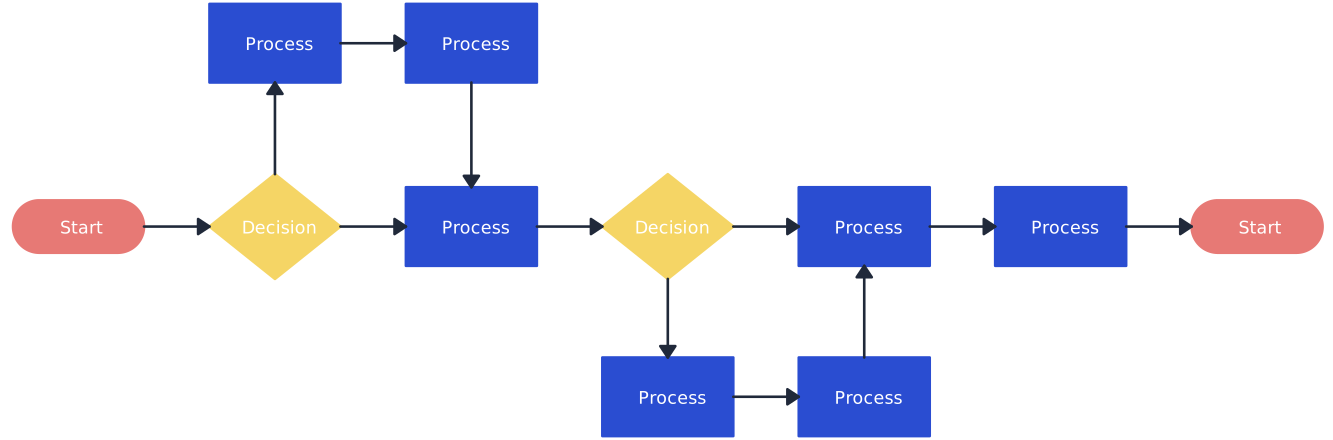
1. Flowcharts
Purpose: Represent the sequence of activities, decisions, inputs, outputs, and flow. Benefits: Creates an accessible current-state or future-state view for validation and discussion.
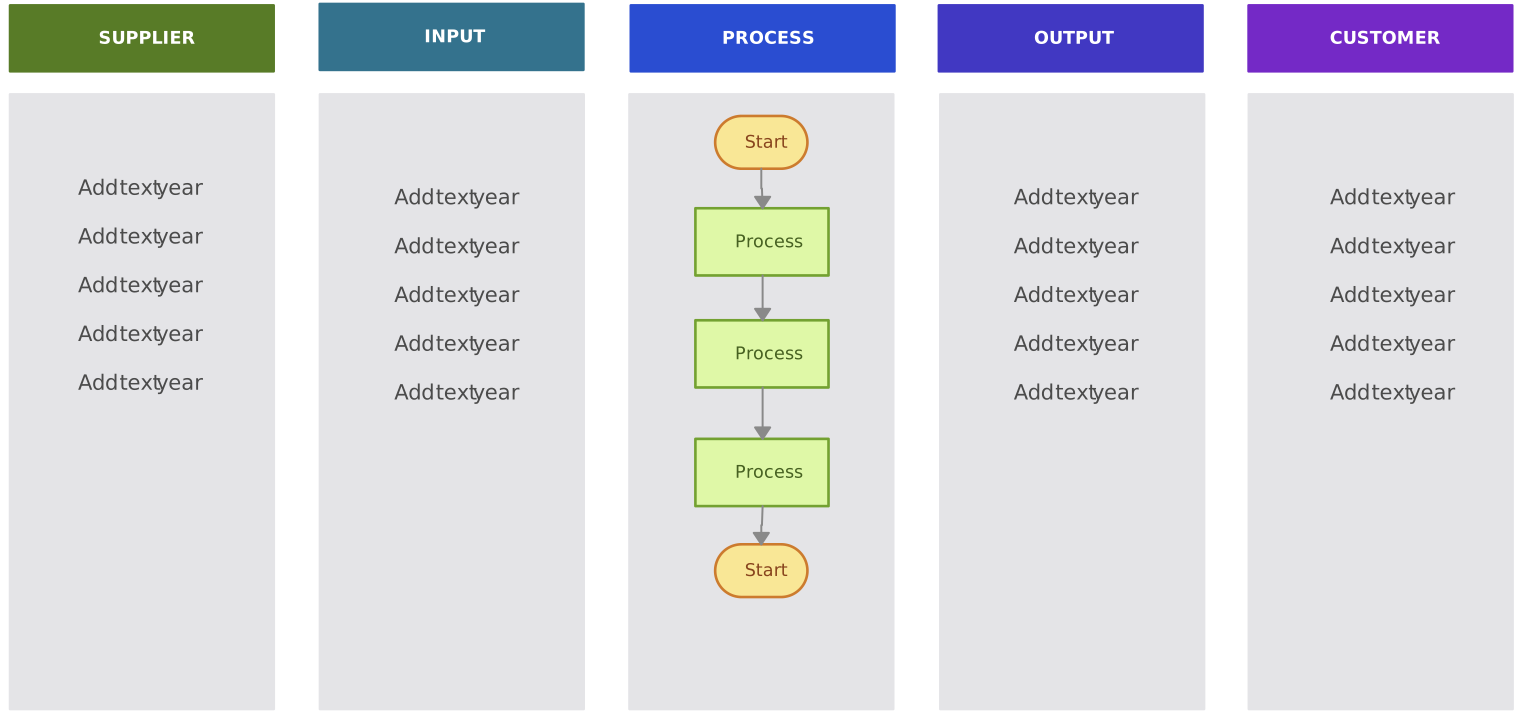
2. SIPOC diagram (Suppliers, Inputs, Process, Outputs, Customers)
Purpose: Define a high-level process boundary through suppliers, inputs, process, outputs, and customers. Benefits: Helps scope the analysis before mapping detailed activities.
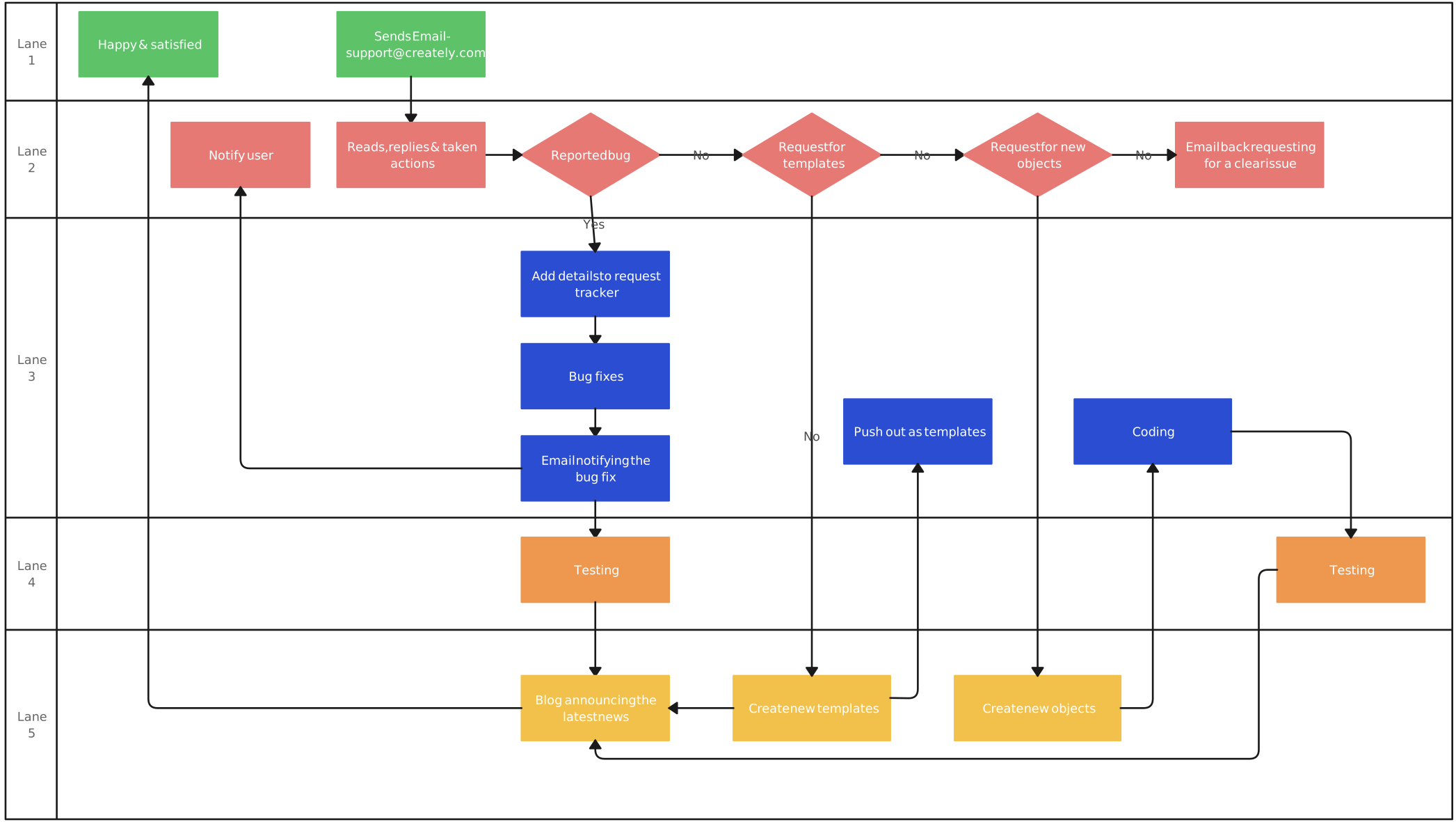
3. Swimlane diagrams
Purpose: Allocate process steps to roles, teams, systems, or functional areas. Benefits: Makes ownership, cross-functional handoffs, and coordination gaps visible.
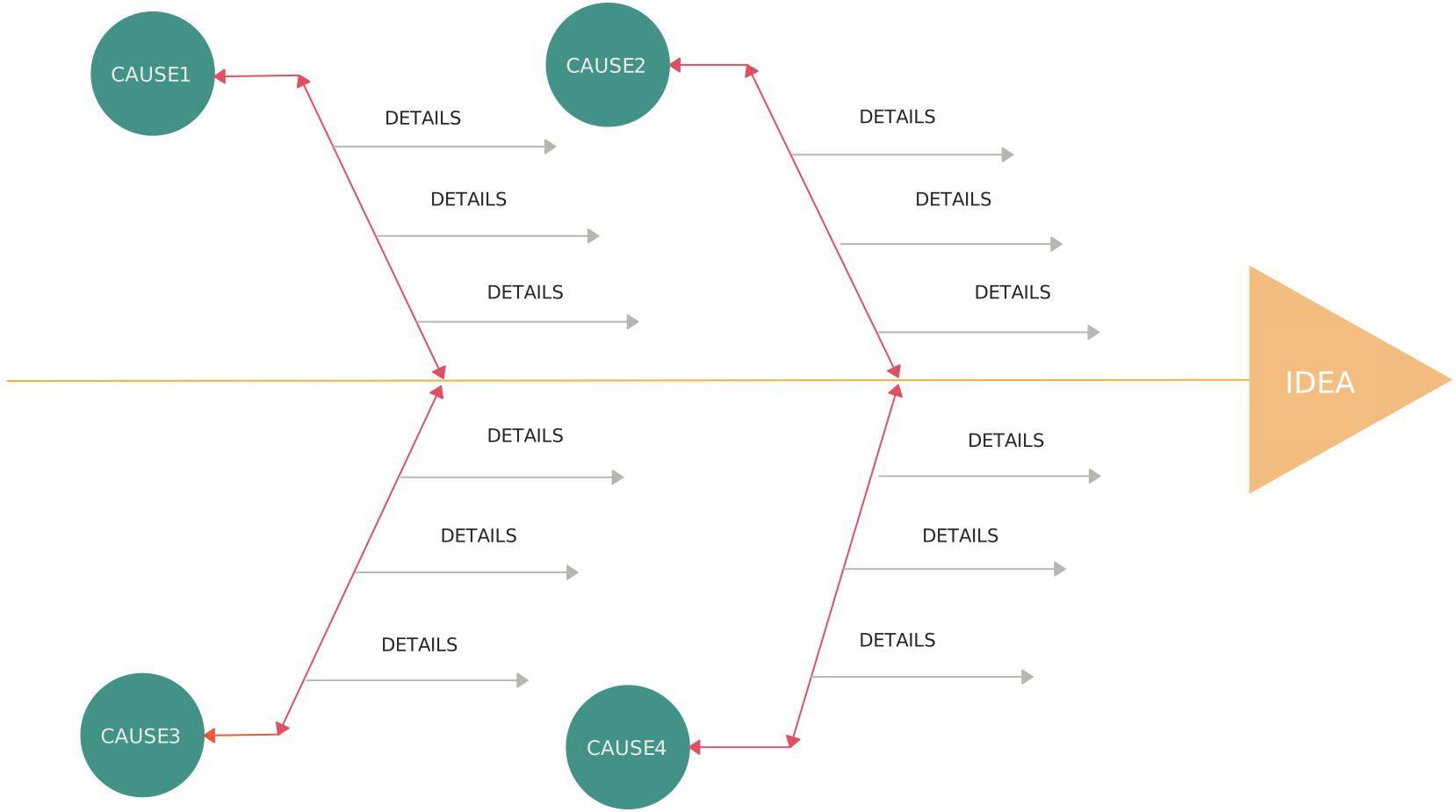
4. Fishbone diagram (Ishikawa or cause-and-effect diagram)
Purpose: Organize possible causes of a defined problem into categories. Benefits: Structures investigation; listed causes still require evidence and validation.
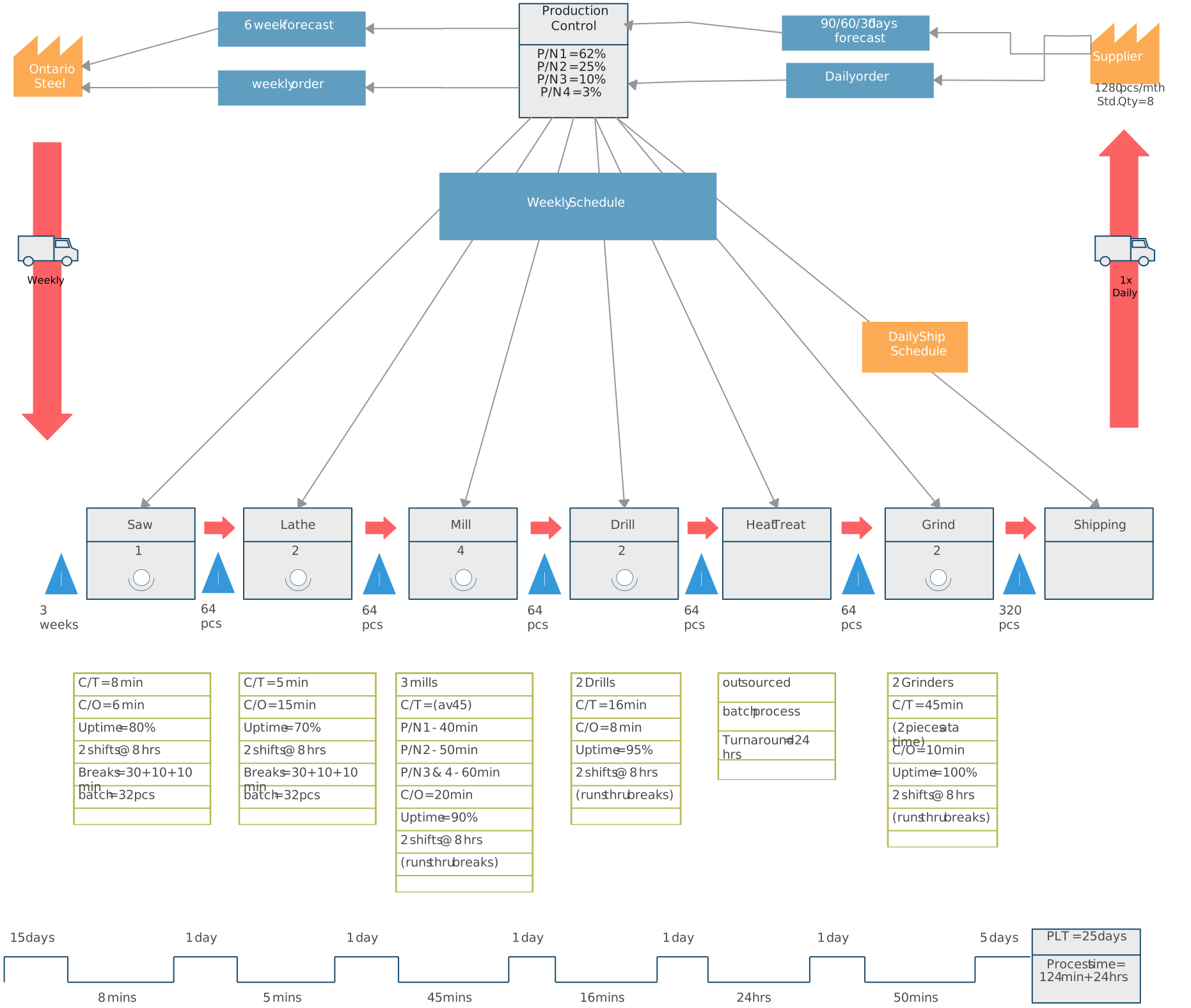
5. Value stream mapping
Purpose: Capture the actual current flow of material and information and design a future-state value stream. Benefits: Helps teams discuss value, waste, delays, and the sources of flow problems across an end-to-end stream.
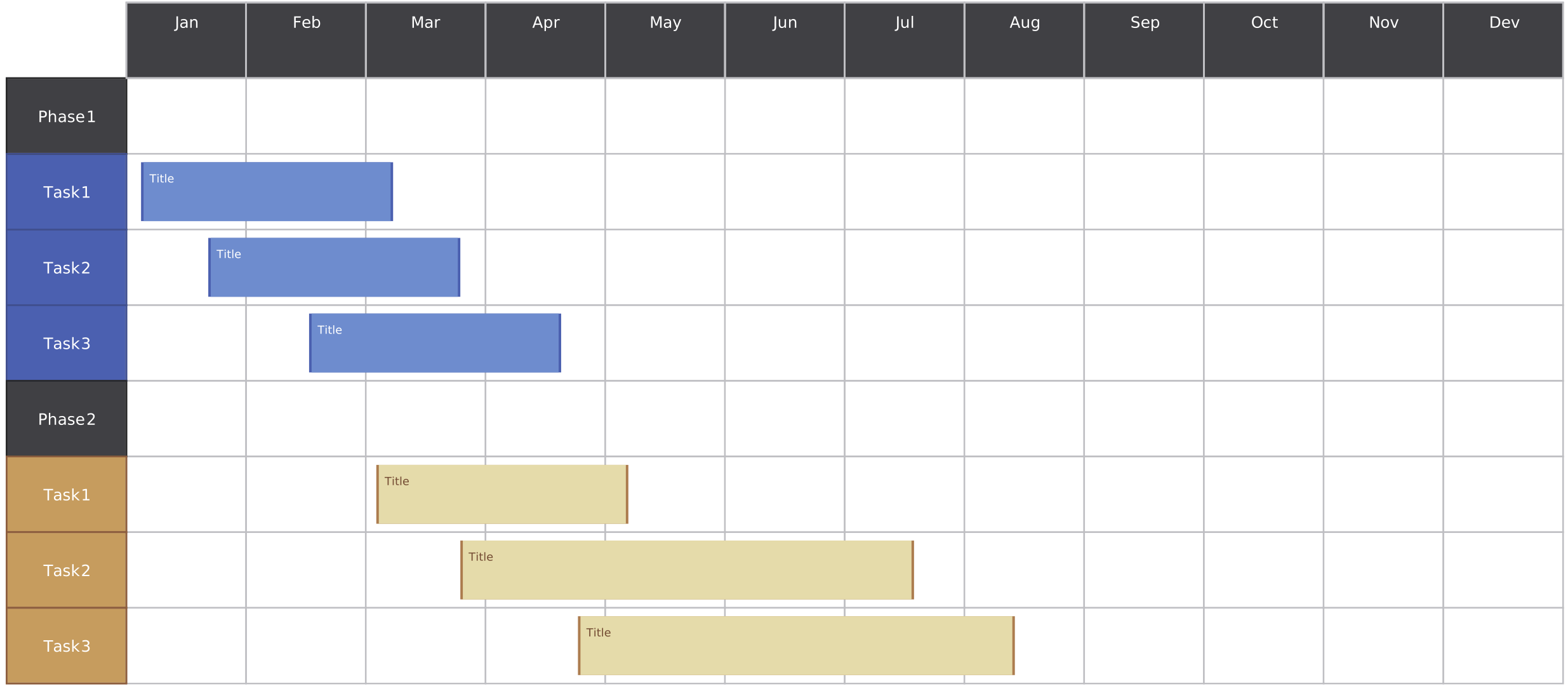
6. Gantt charts
Purpose: Plan the timing, dependencies, and ownership of an improvement initiative. Benefits: Supports implementation planning after analysis; it does not analyze the operating process by itself.
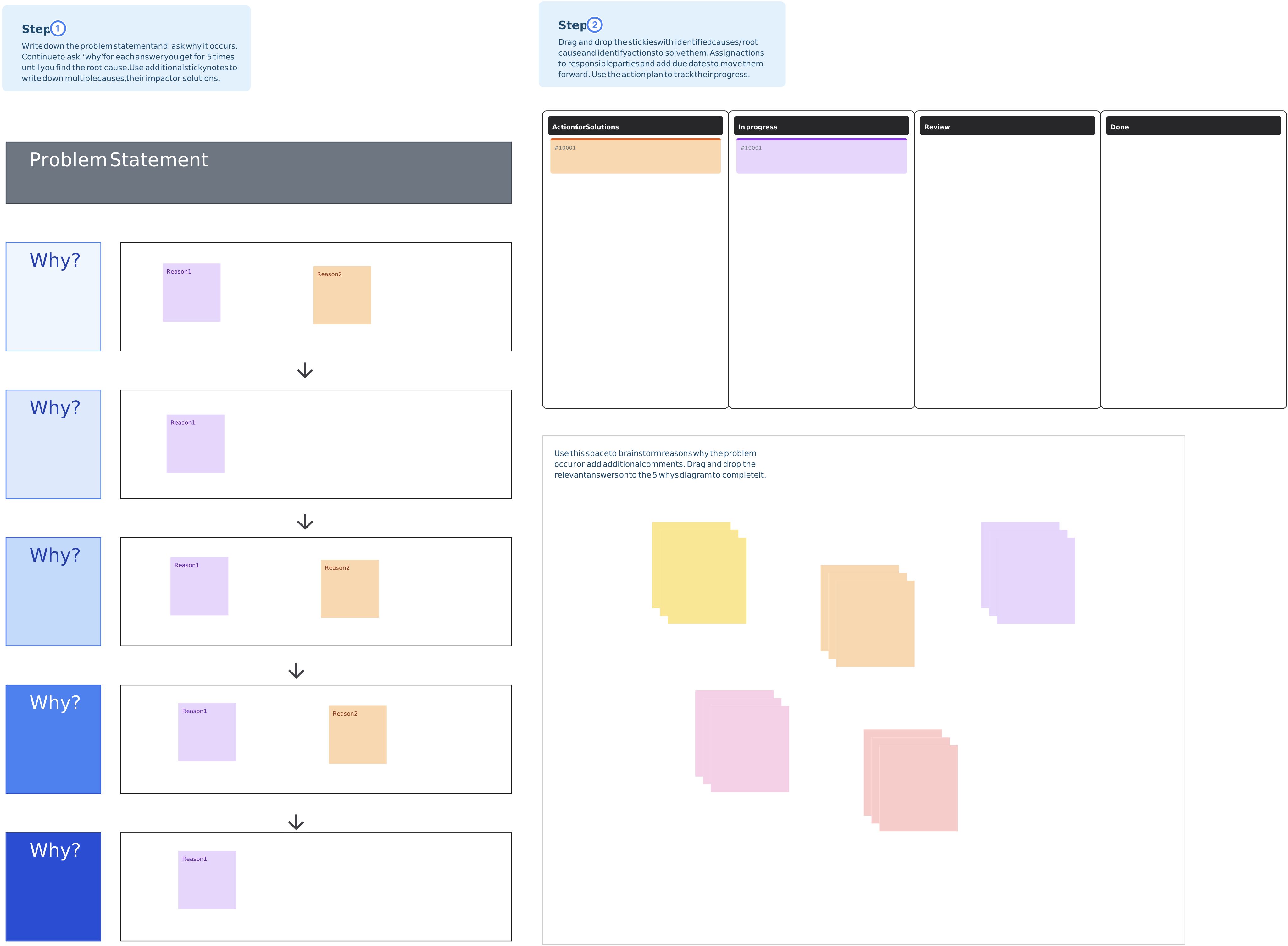
7. 5 Whys analysis
Purpose: Explore cause-and-effect by repeatedly asking why a defined problem occurred. Benefits: Helps move beyond symptoms, but the result must be checked against evidence and may reveal multiple interacting causes.
Discover more business process analysis tools and models with our guide on the ultimate list of business analysis models.
Why a Business Process Analysis is Important
Business process analysis can improve decision quality by connecting a validated process view with operational evidence. Its value depends on the scope, data, analysis method, implementation, and follow-through.
- Improve flow: Evidence about cycle time, queues, constraints, and handoffs helps teams identify changes that may improve speed or throughput.
- Inform resource decisions: Workload, capacity, utilization, and demand data support better decisions about people, systems, and equipment.
- Improve quality: Error, defect, rework, and customer-feedback data can reveal where a process fails to meet requirements.
- Prepare for change: Current- and future-state models help stakeholders assess the operational impact of technology, policy, market, or organizational changes.
- Assess risks and controls: Maps make responsibilities, controls, exceptions, and evidence requirements visible for qualified review.
- Align process outcomes with objectives: Defined measures show whether a process contributes to the customer and business outcomes it is intended to support.
- Identify cost opportunities: BPA can reveal waste, duplication, delays, and avoidable complexity. Savings should be verified after implementation rather than assumed from the analysis.
Business process analysis produces options and evidence, not guaranteed results. Close the loop by assigning ownership, implementing approved changes, measuring outcomes, recording review decisions, and maintaining the process map as a current operational reference.
Sources